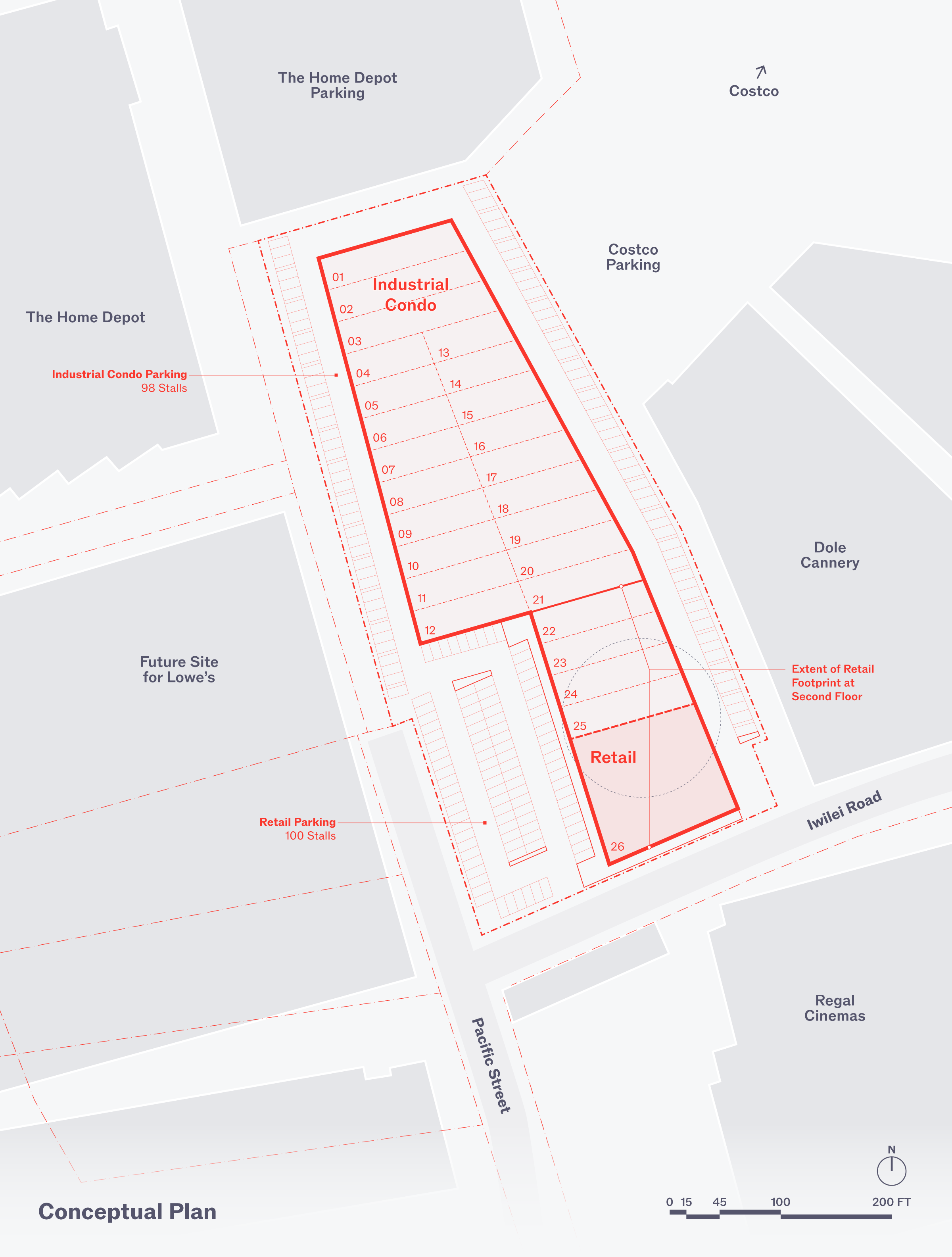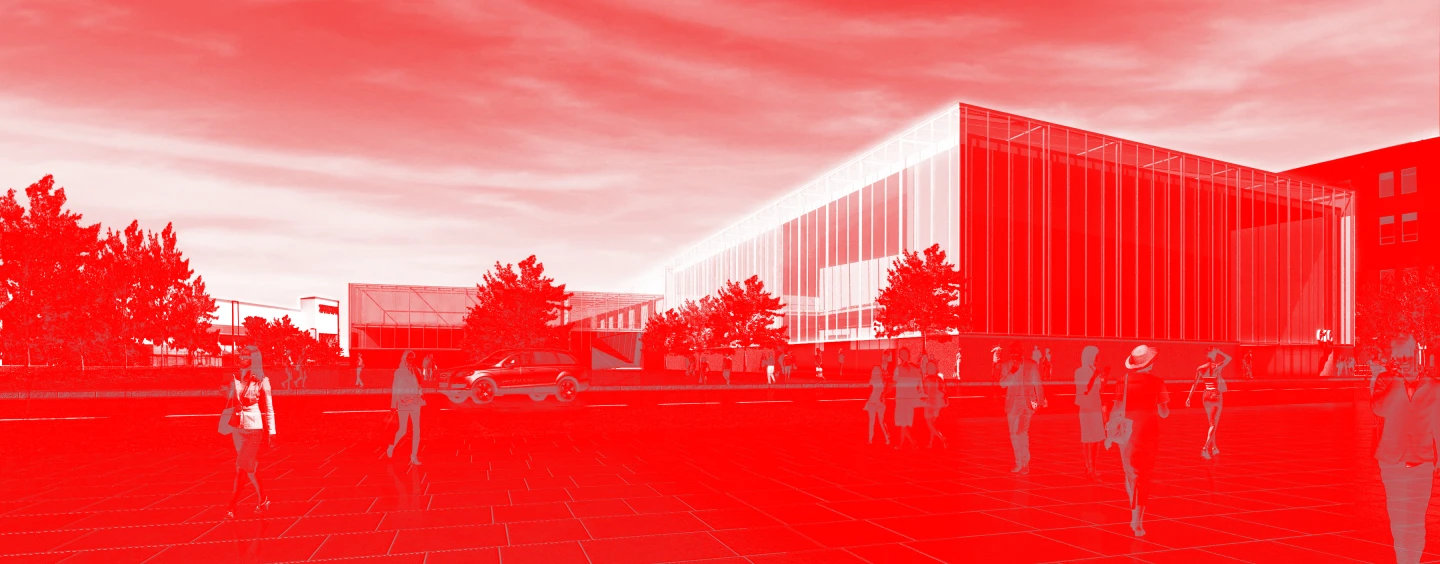
Set within a historically significant district adjacent to Honolulu Harbor, where light industry seamlessly blends with the communities that support it, the 616 Iwilei Industrial Condo development refreshes the vision of how small-scale industry contributes to the unique characteristics of Honolulu’s Primary Urban Core. The proposed design imagines repurposing a vacant former natural gas processing site, which sits adjacent to the original Dole Plantation Warehouse, representing an important opportunity to reinforce and connect to the city’s working economy.
The design introduces a new model for industrial condominiums that remediates an environmentally compromised site to support local ownership by providing a complex of privately owned warehouse spaces for small businesses to operate and grow. It also engages the public through a retail component that fronts the warehouse function and addresses the prominent frontage along Iwilei Road, encouraging an active mix of community and industry.
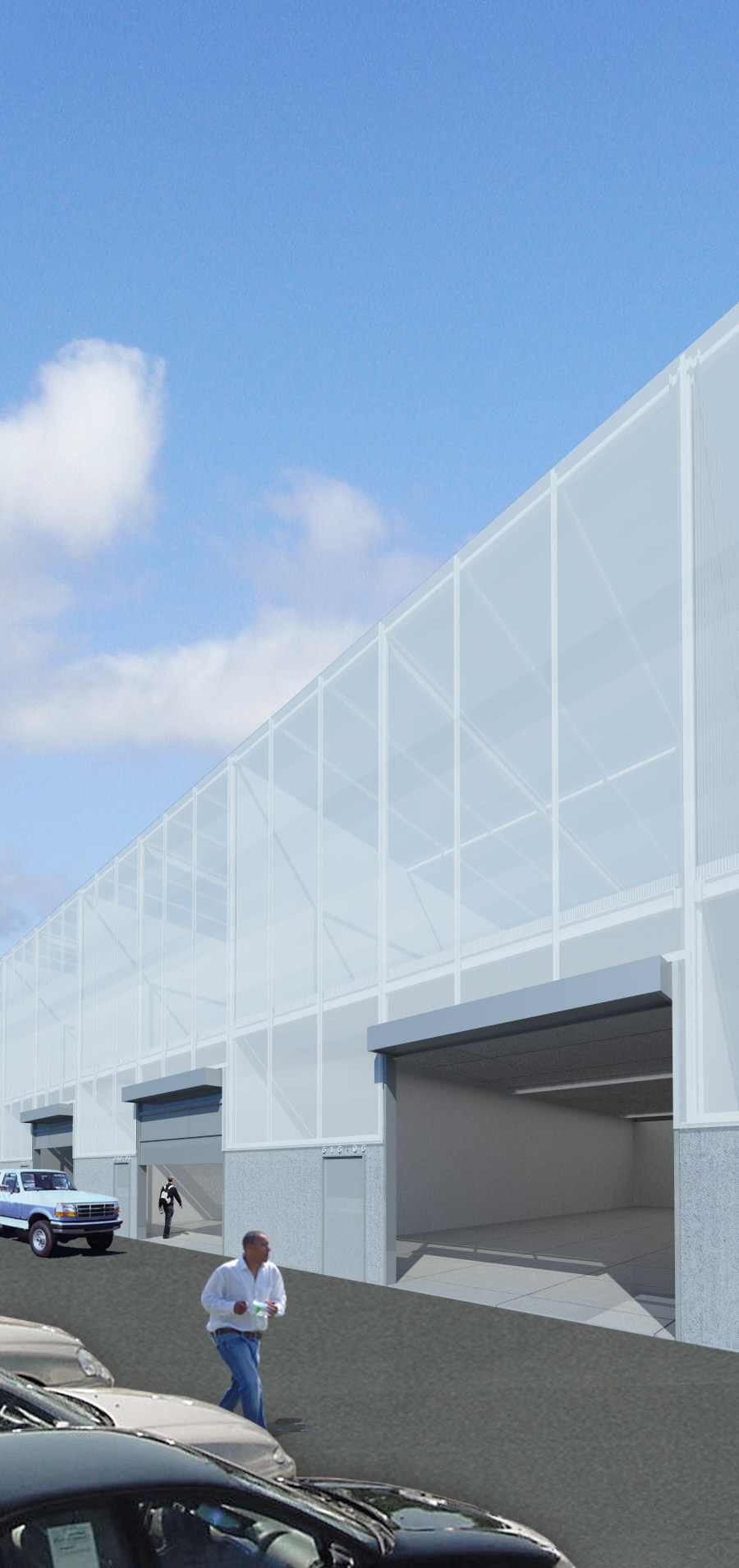
With respect to the compromised soils and environmental health resulting from the site’s former natural gas processing plant, the design advances an efficient mitigation and capping strategy utilizing a lightweight tensile fabric building envelope anchored by a cast-in-place concrete foundation—combining durability with visual lightness. The fabric structure takes advantage of Hawai‘i’s temperate climate to provide natural ventilation and daylight. Its lightweight character reduces structural construction costs, creating a model for light industrial space that is both attainable and desirable for small business owners.
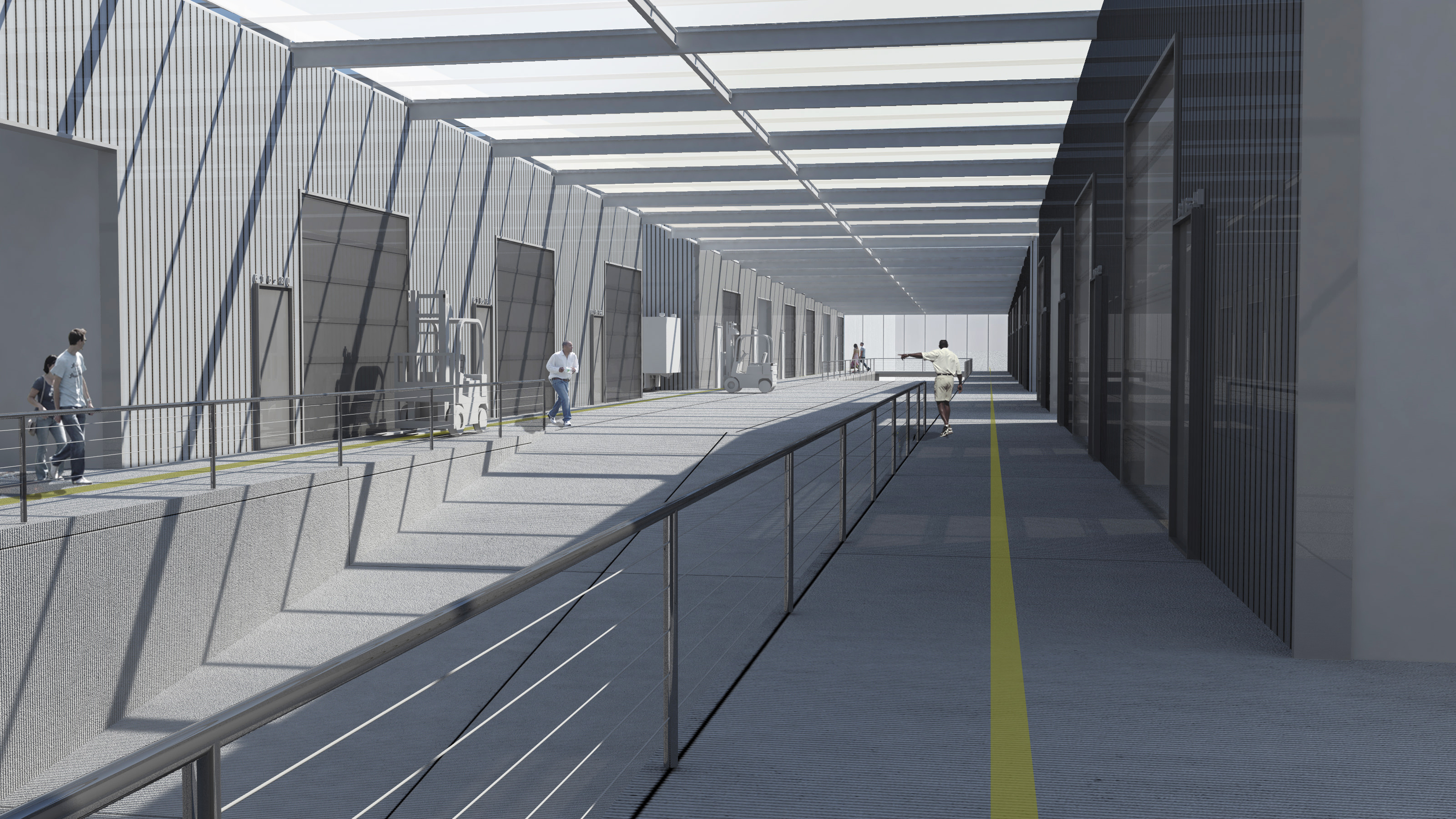
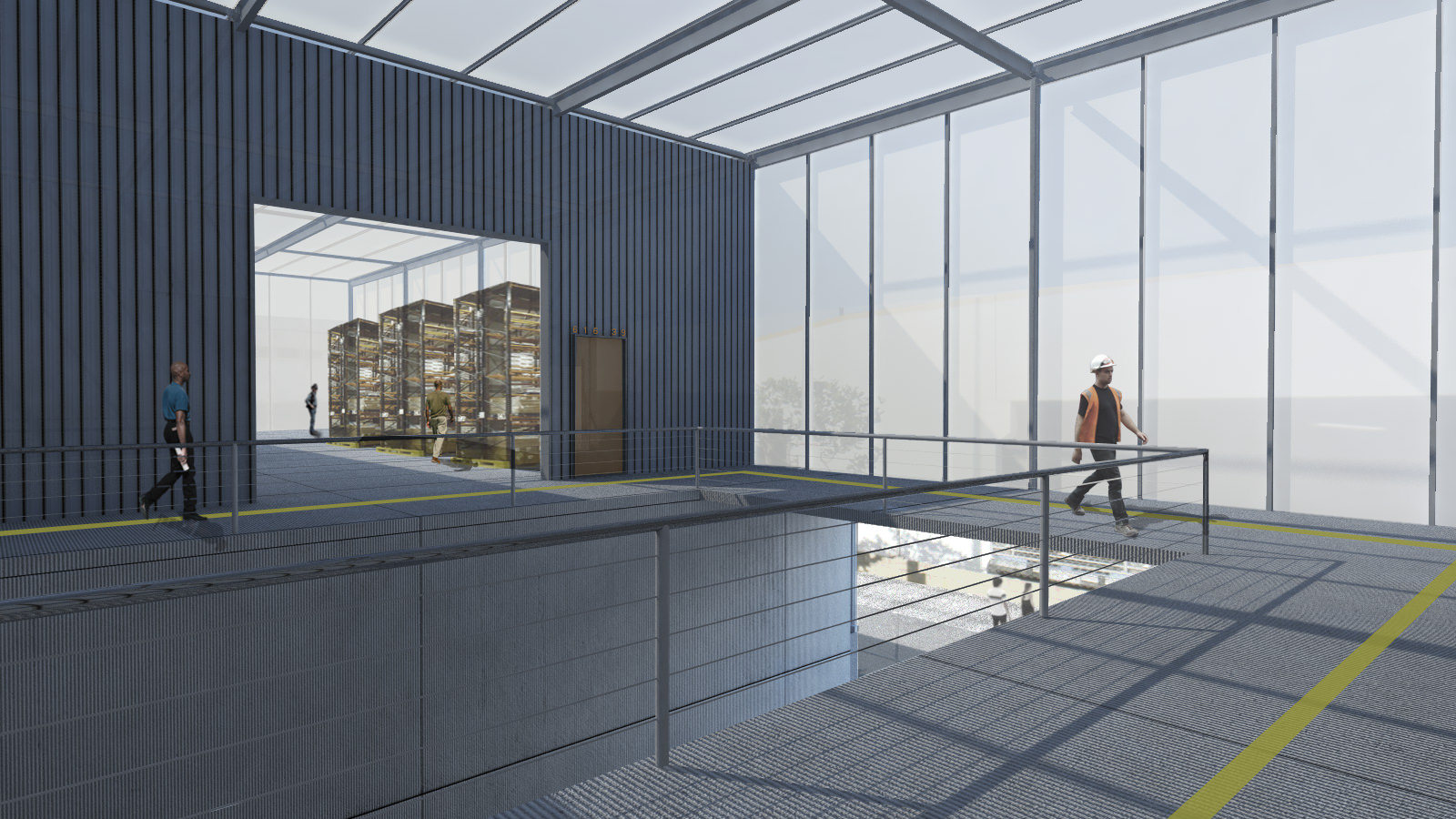
A consistent roof pitch, designed for rainwater collection, organizes two floors of industrial warehouse bays with perimeter access at the ground plane and double-loaded internal access from a central service access on the upper level. The roof form follows the modular grid layout that defines the building’s organization and establishes varying heights across the condominium bays, which introduces flexibility in warehousing capacity and promotes an advantageous mix of industrial uses and services. The shared central spine accommodates both pedestrian and vehicular access, illuminated by diffuse daylight filtering through the tensile fabric enclosure. Large-format openings, passive ventilation, and exposed material finishes further express a sustainable design approach attuned to Honolulu’s climate and a resilient future-proof industrial center.
Overall, the proposed development creates a shared framework where producers, suppliers, and service providers work in proximity—sharing visibility, resources, and infrastructure. The project preserves and advances the presence of the self-owned business culture central to building the city’s community within an intentional architectural expression that reinforces Honolulu’s identity as a place where commerce, culture, and community remain closely intertwined.