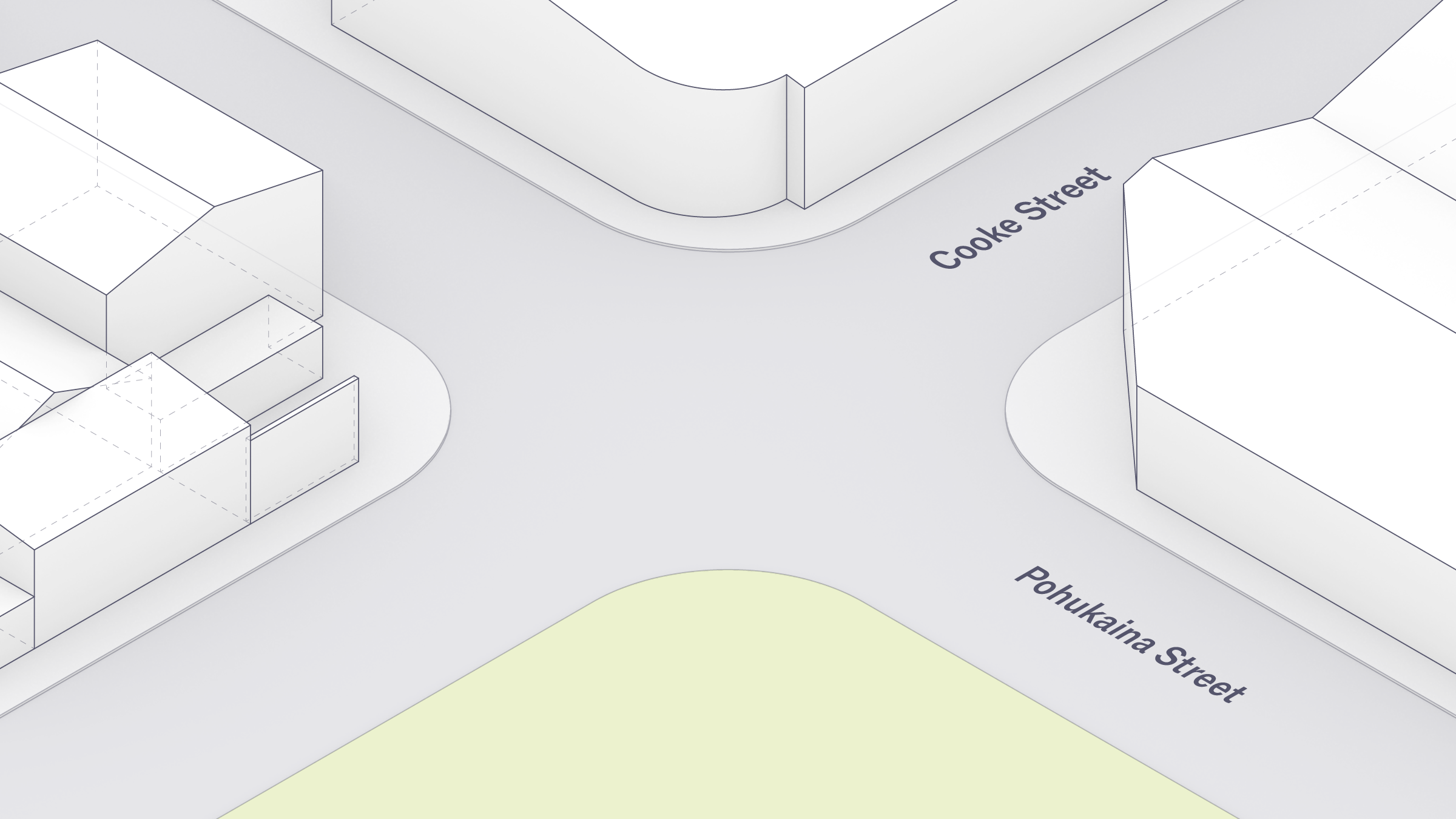
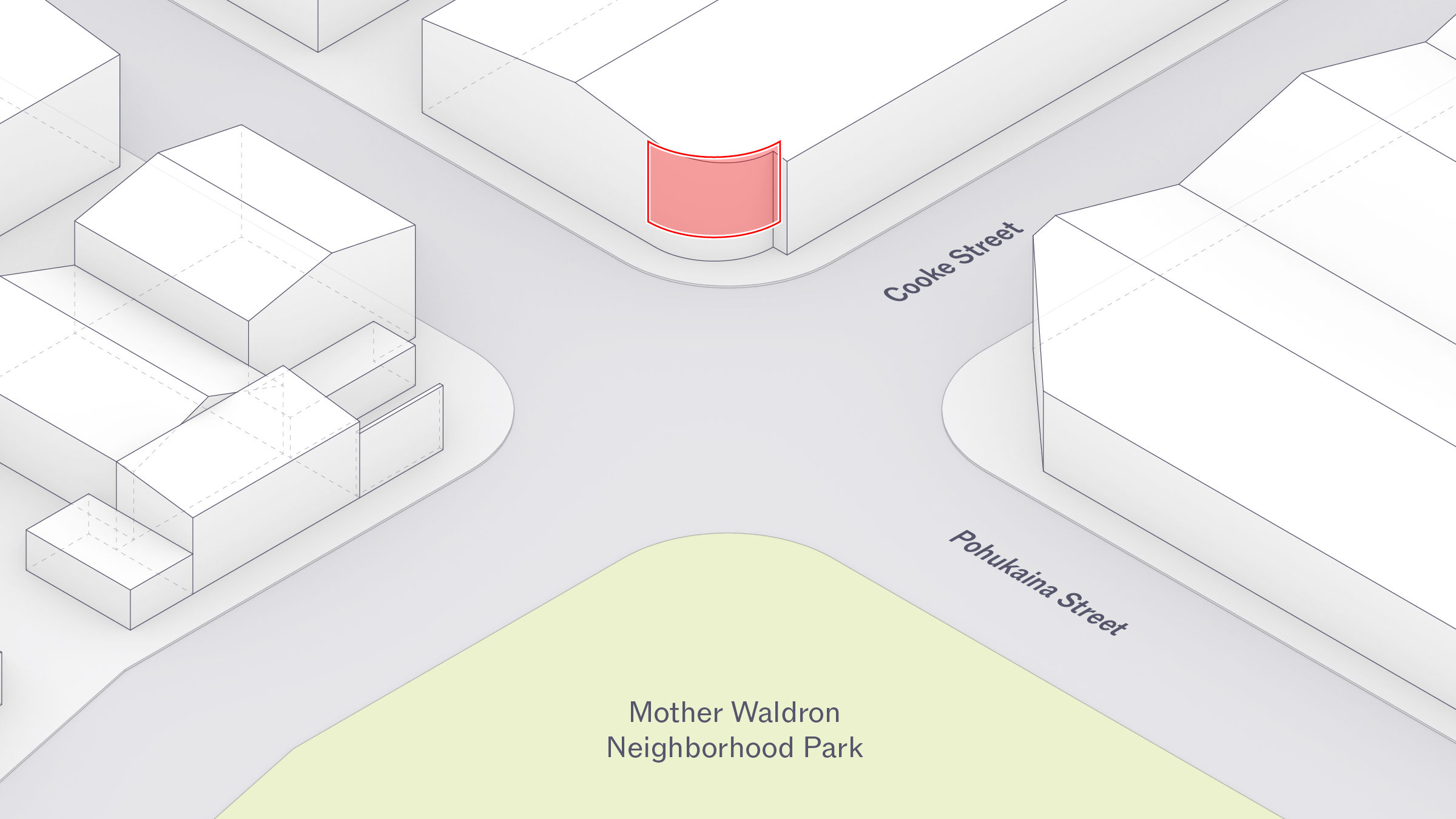
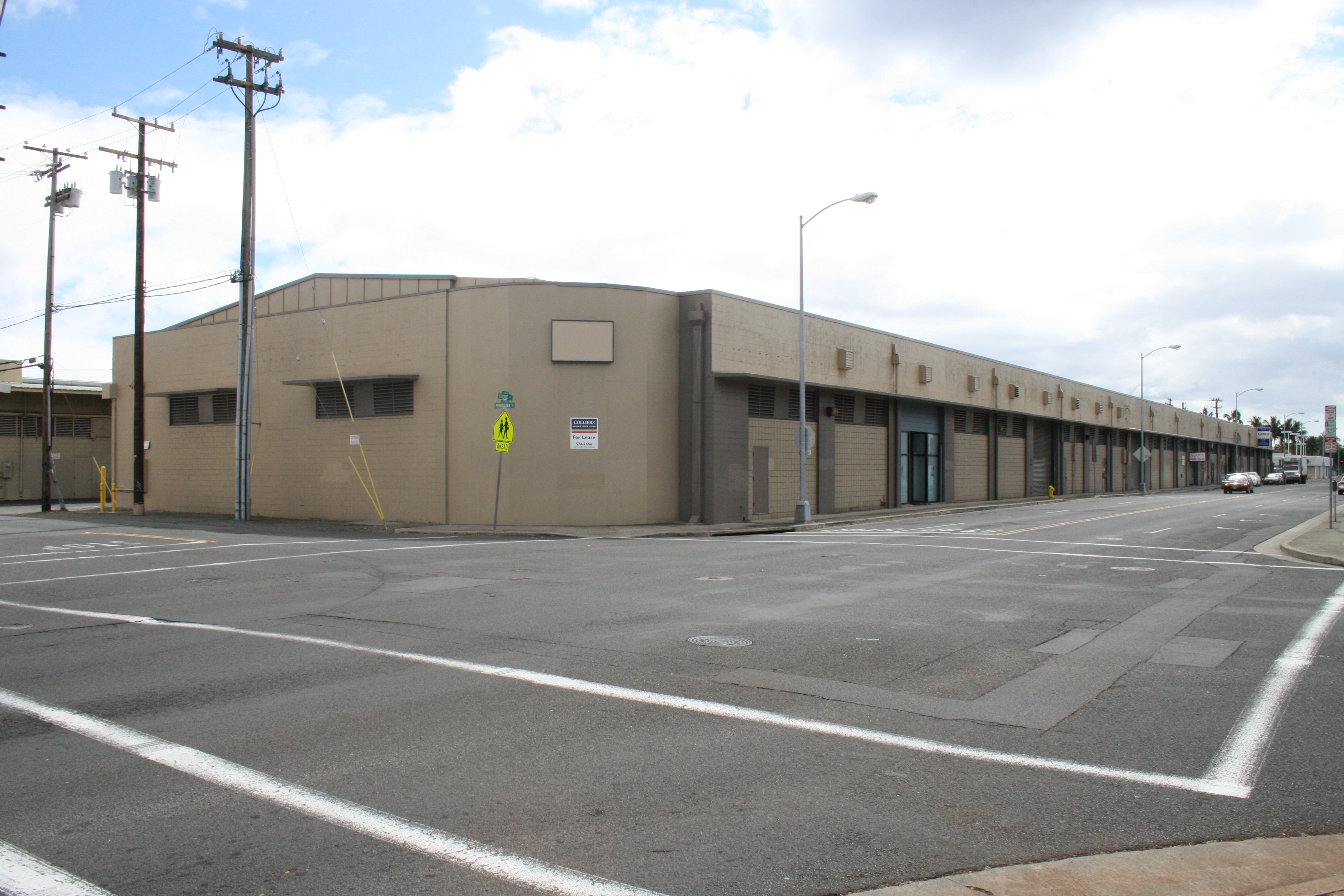
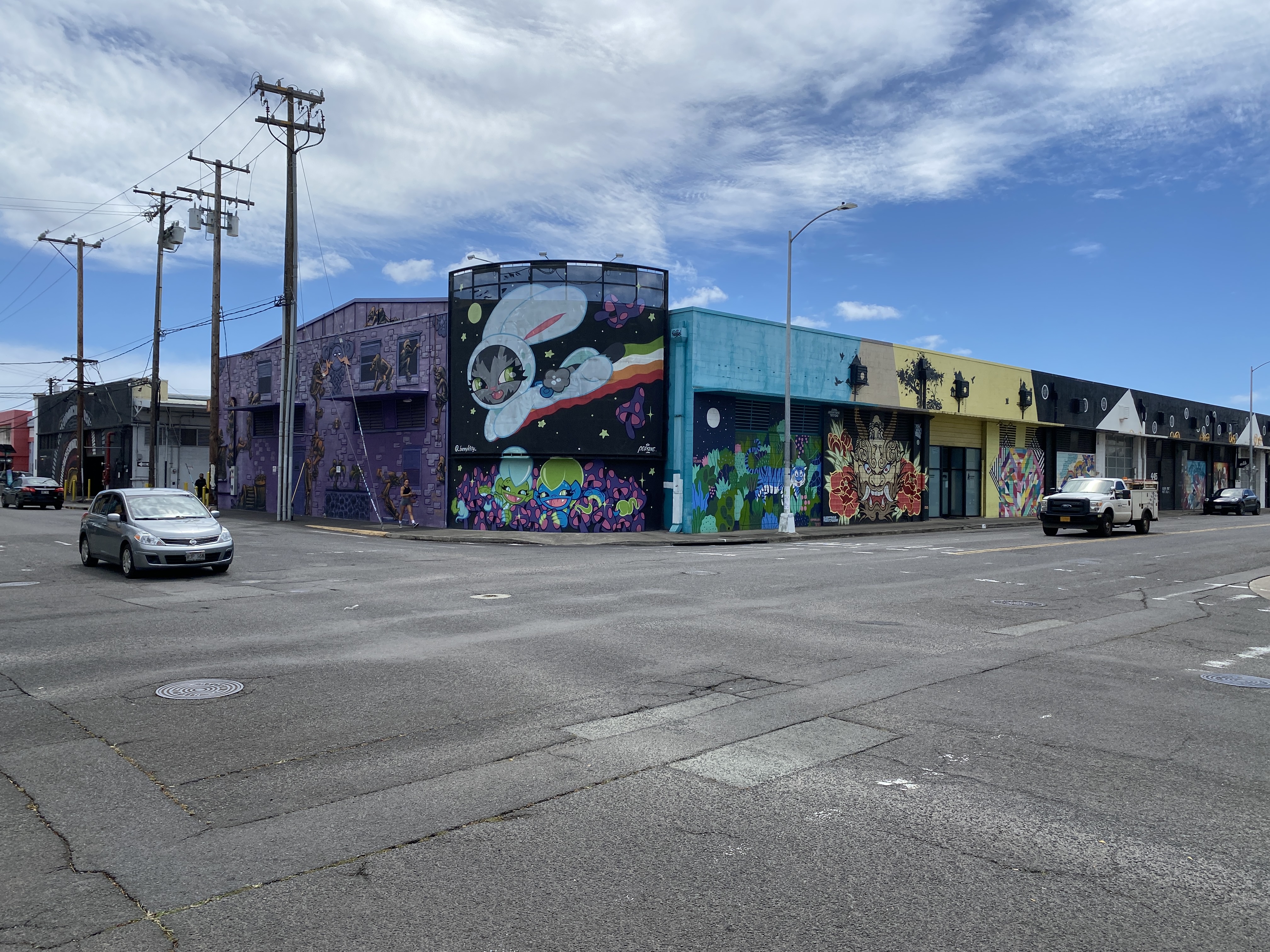
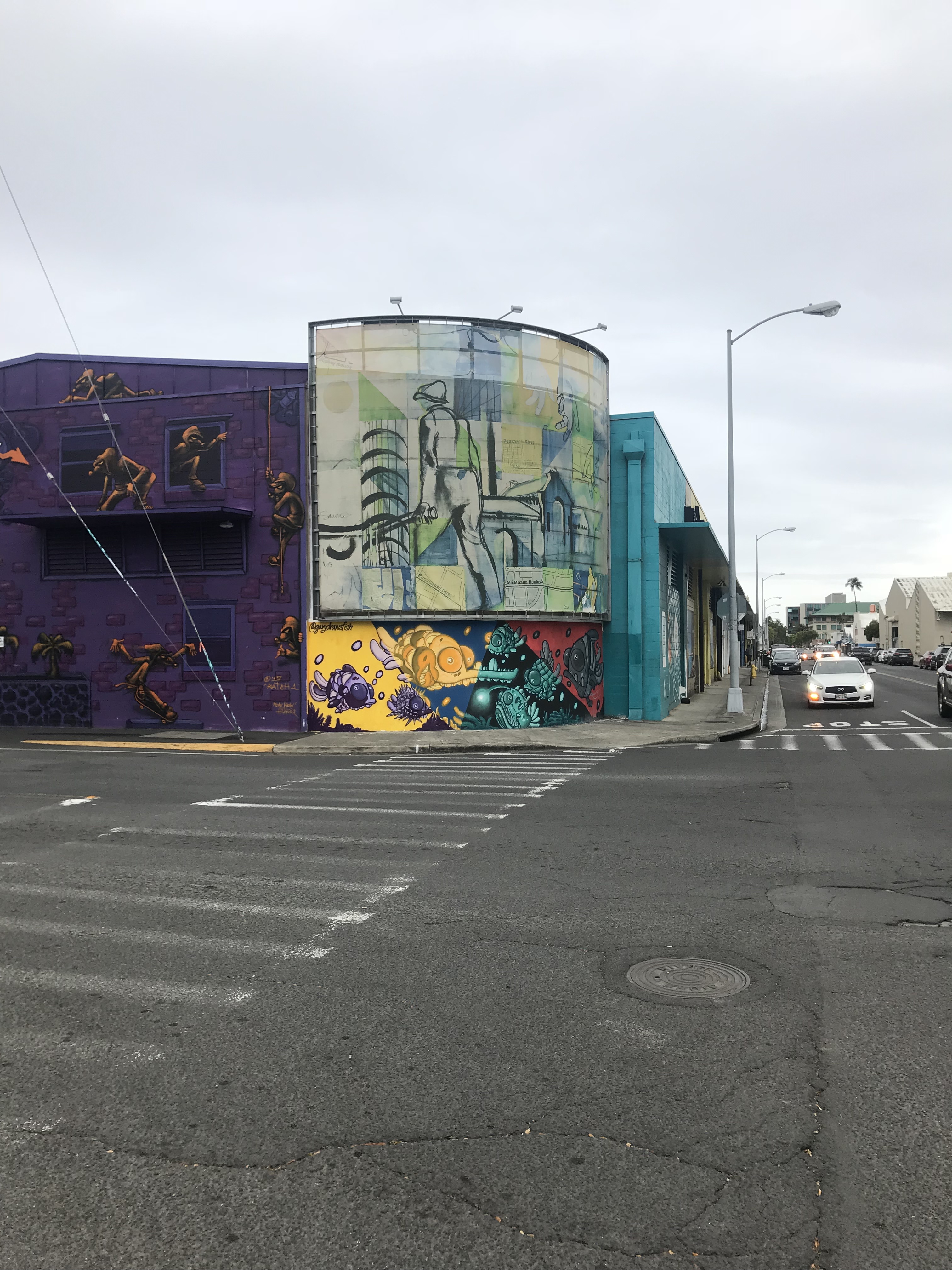
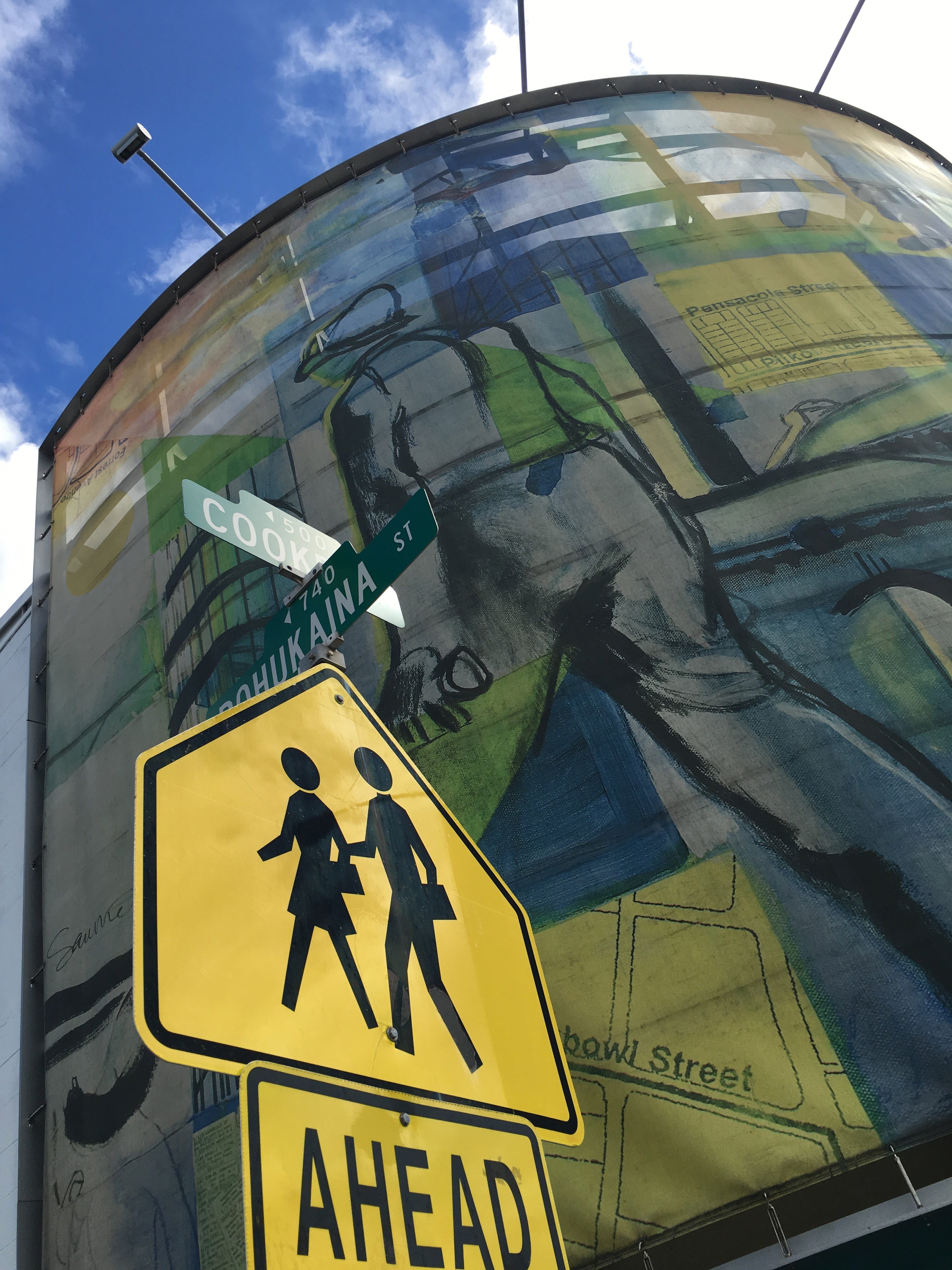
Located at the corner of Cooke and Pohukaina Streets, the Kakaʻako Art Wall marked a visible shift in the neighborhood’s identity—from a long-established community of residents and workers bridging downtown and Ala Moana to an urban destination of its own.
Through an unprecedented collaboration between the Hawai‘i Community Development Authority (HCDA), Kamehameha Schools, and the University of Hawai‘i, the partnership reflected a shared commitment to supporting local creative voices and amplifying Kakaʻako’s cultural identity within Honolulu. Designed as a temporary and interchangeable installation, the project invited student and emerging artists to interpret the district’s sense of place and heritage directly onto its walls—allowing Kakaʻako to, in a sense, tell its own story.
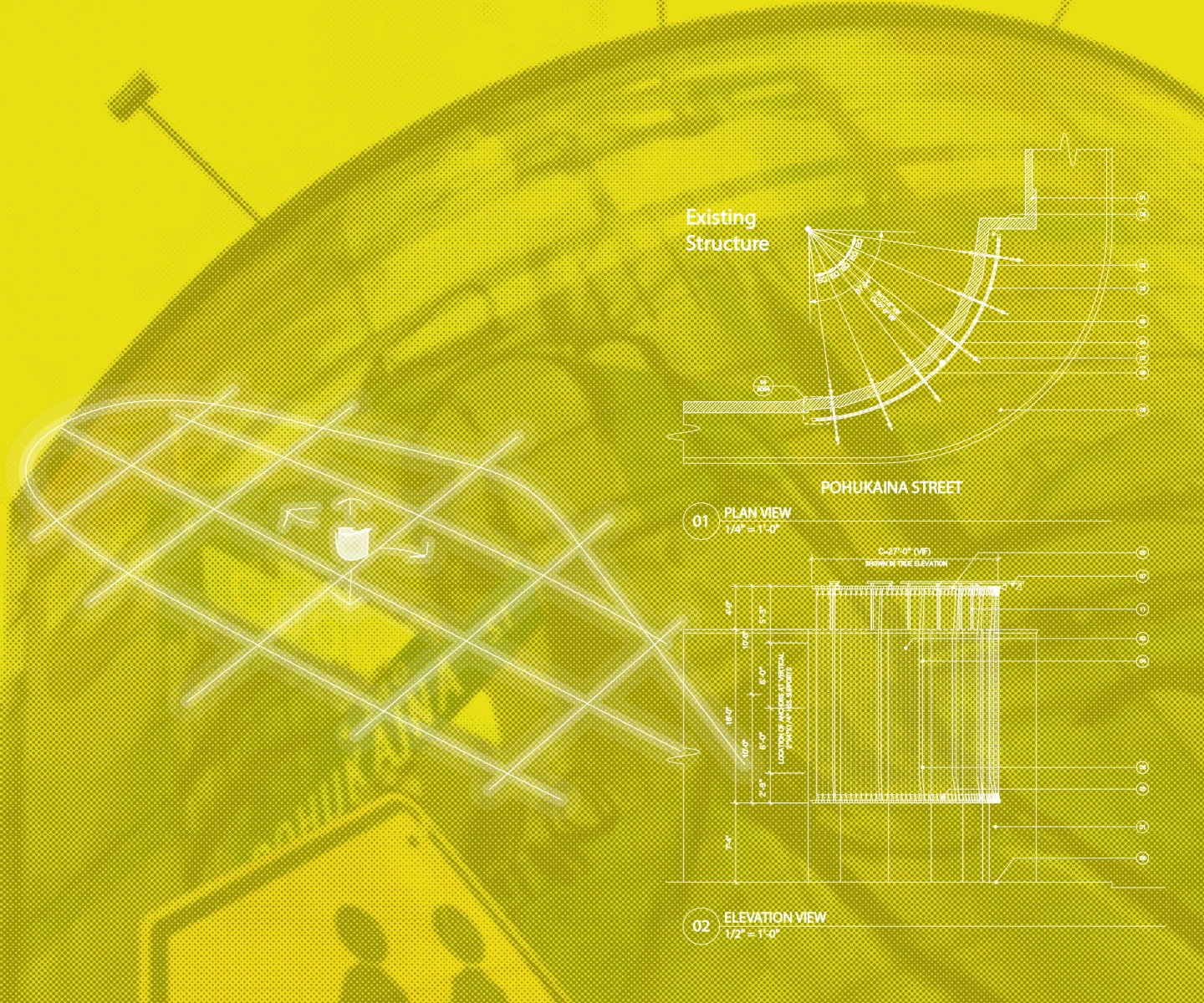
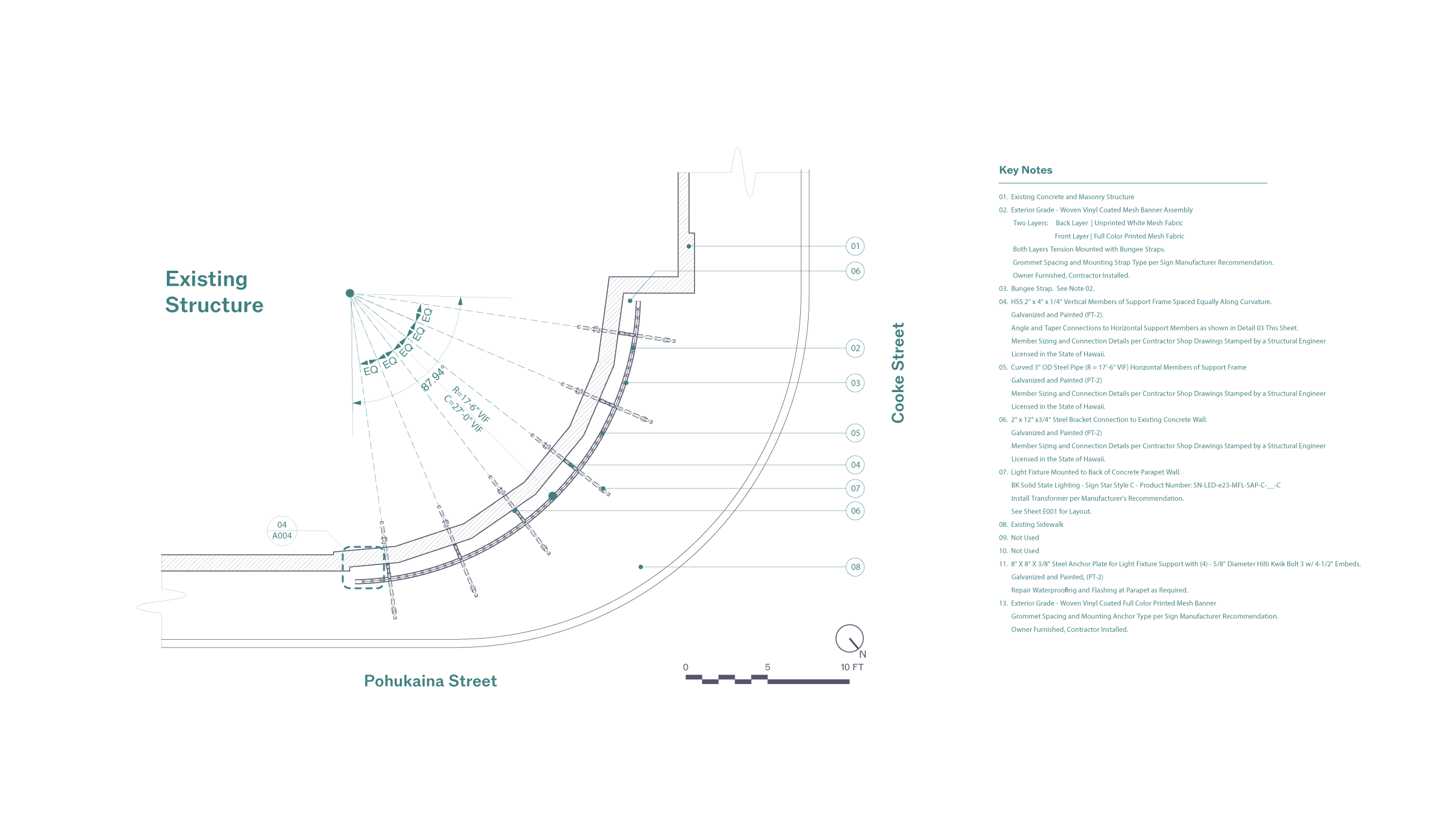
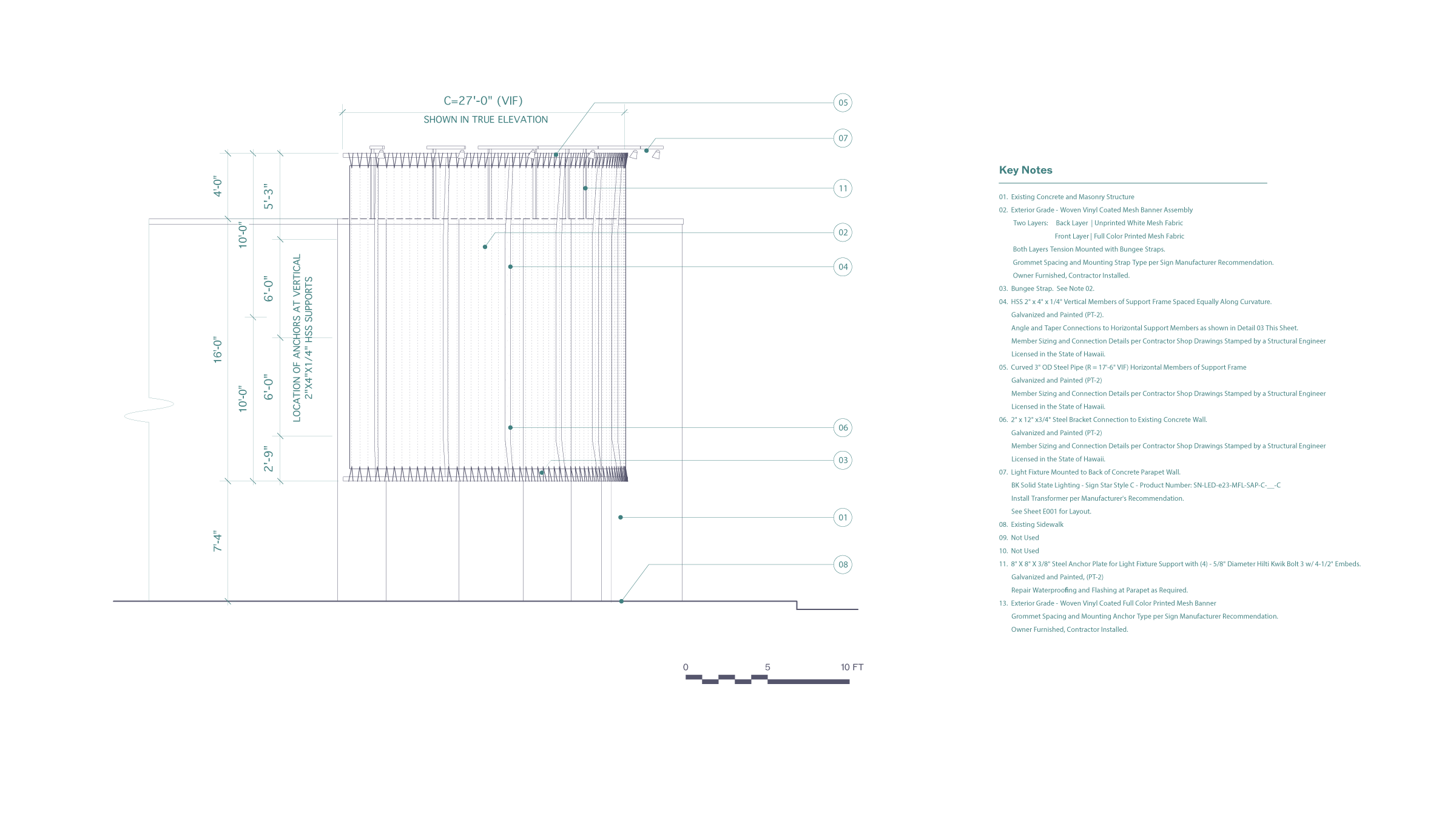
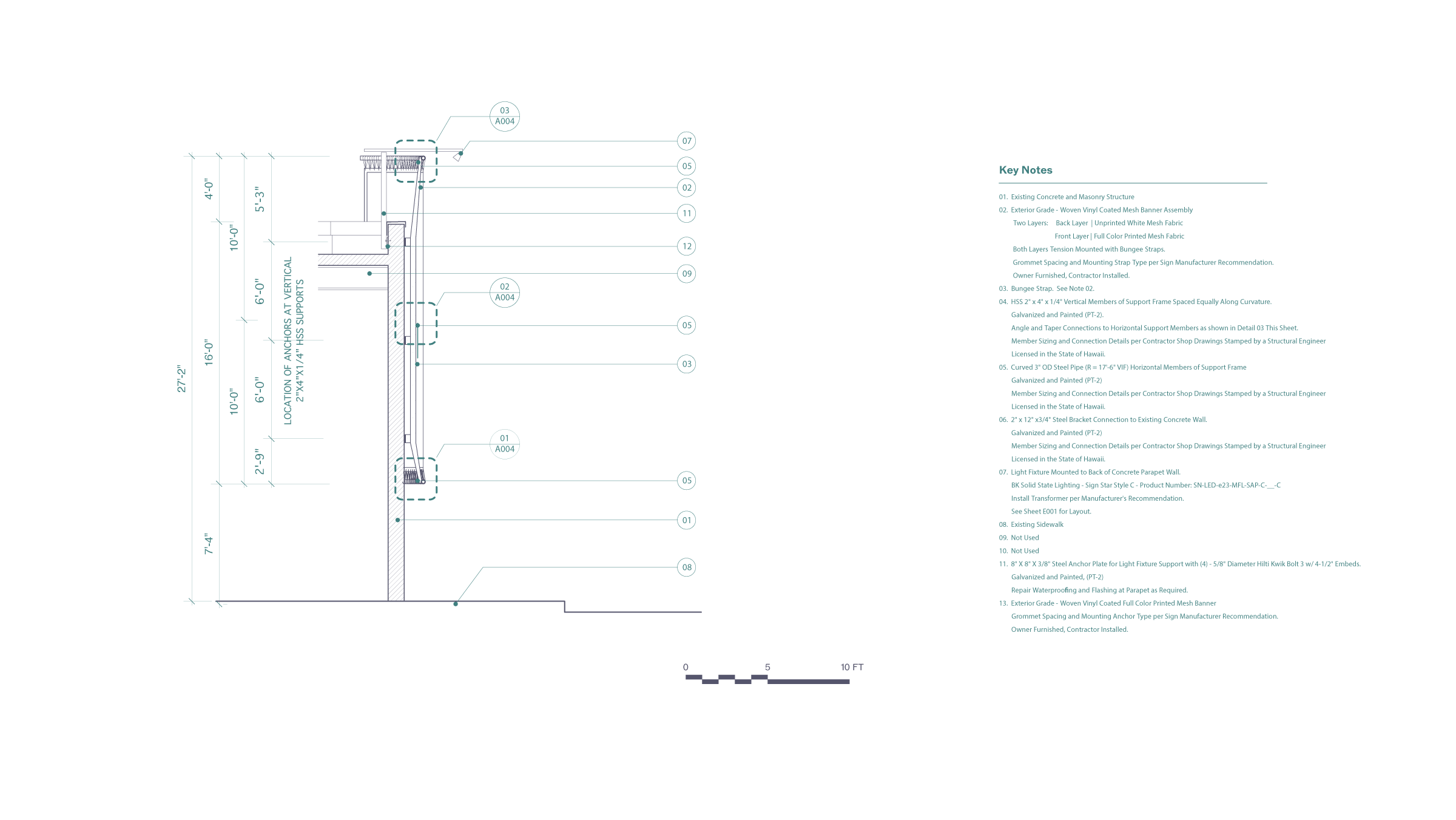
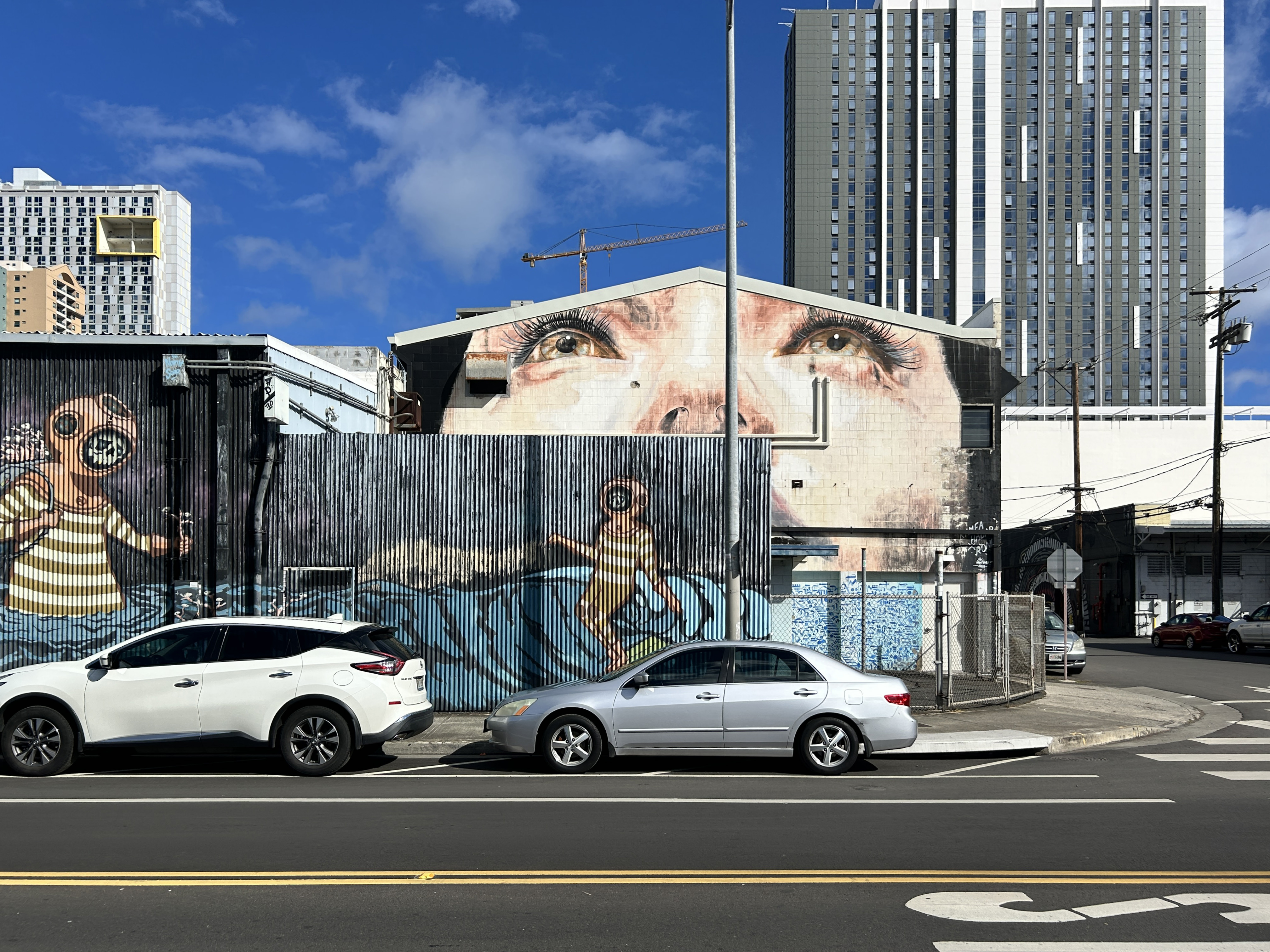
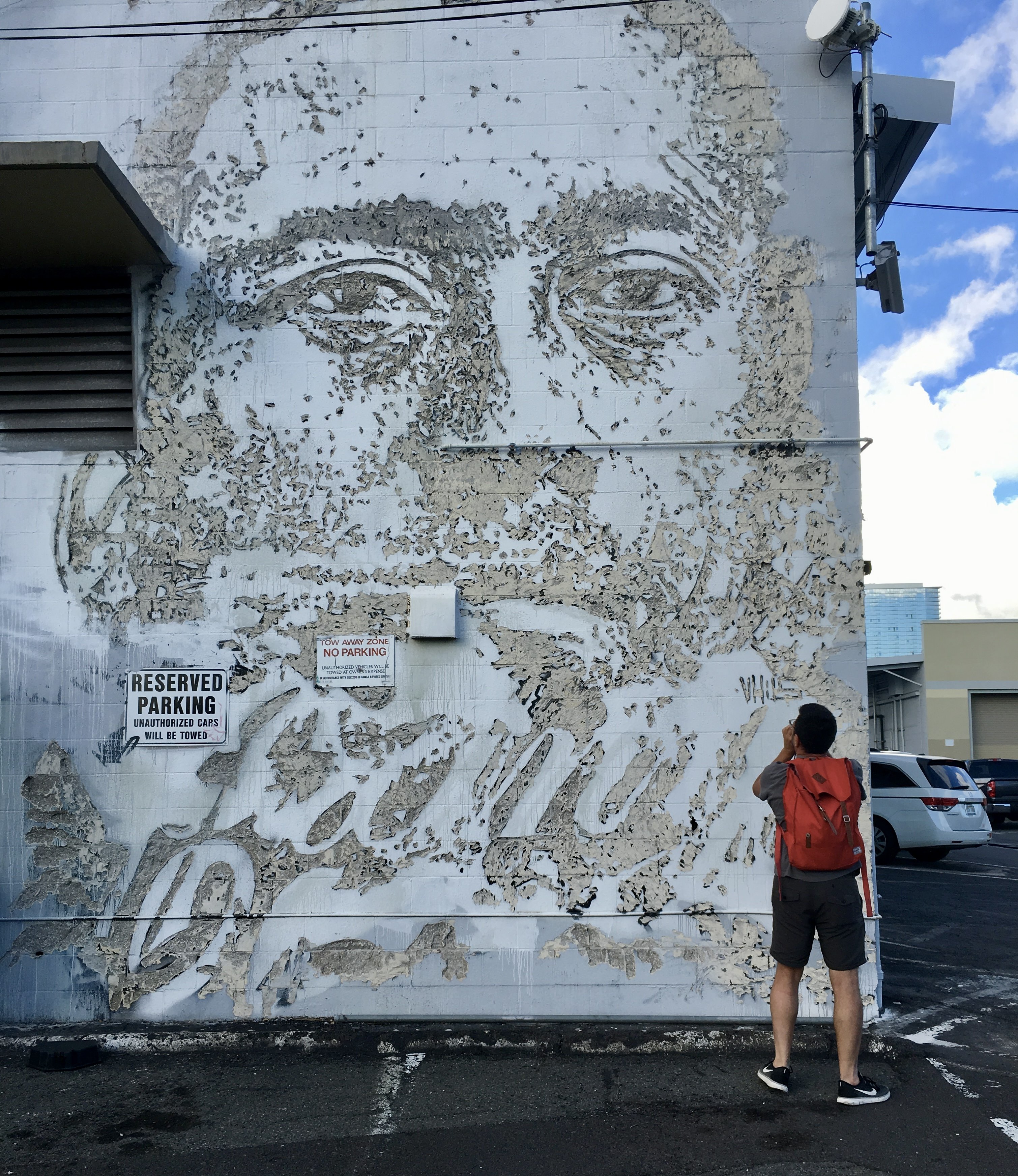
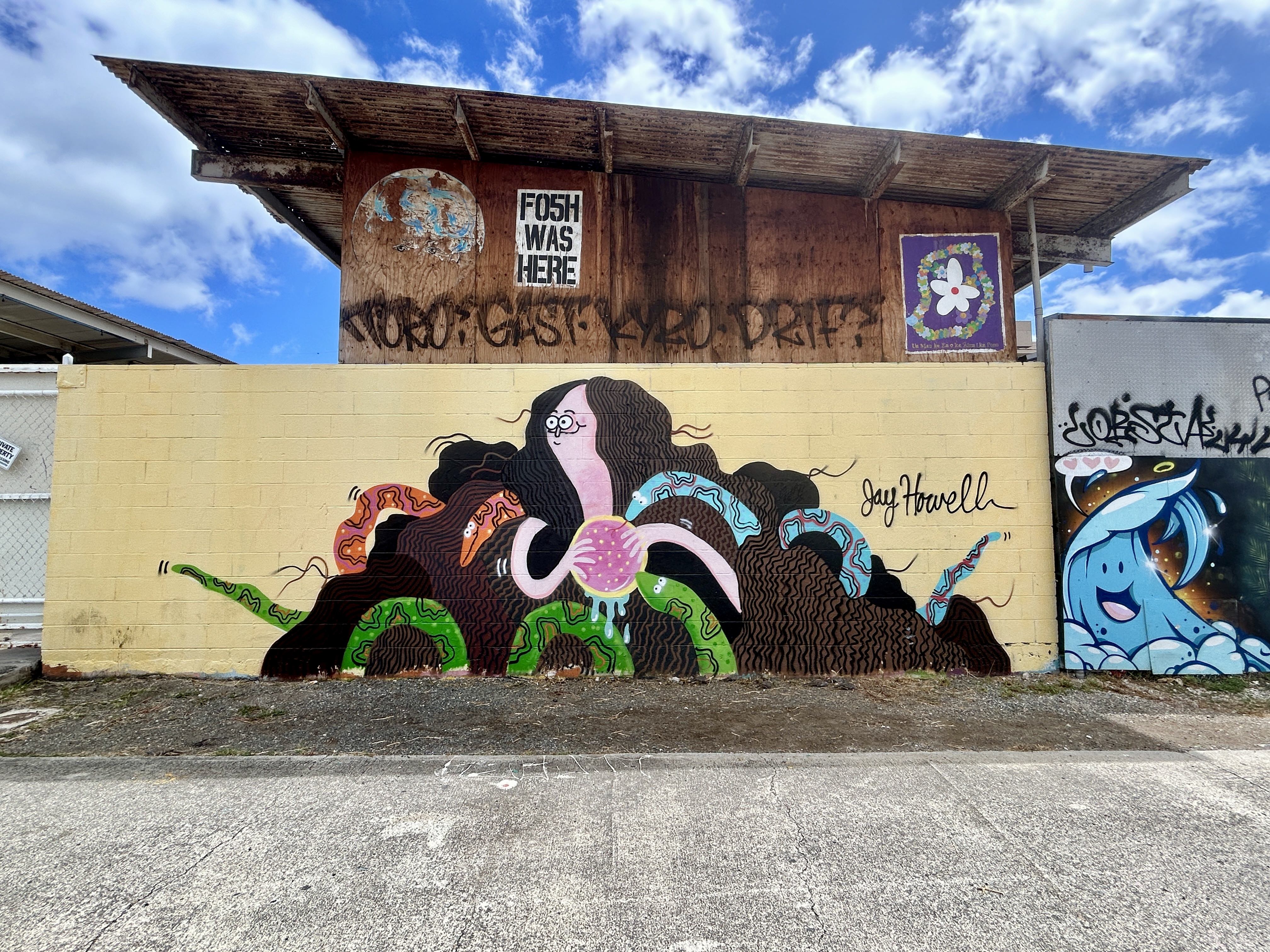
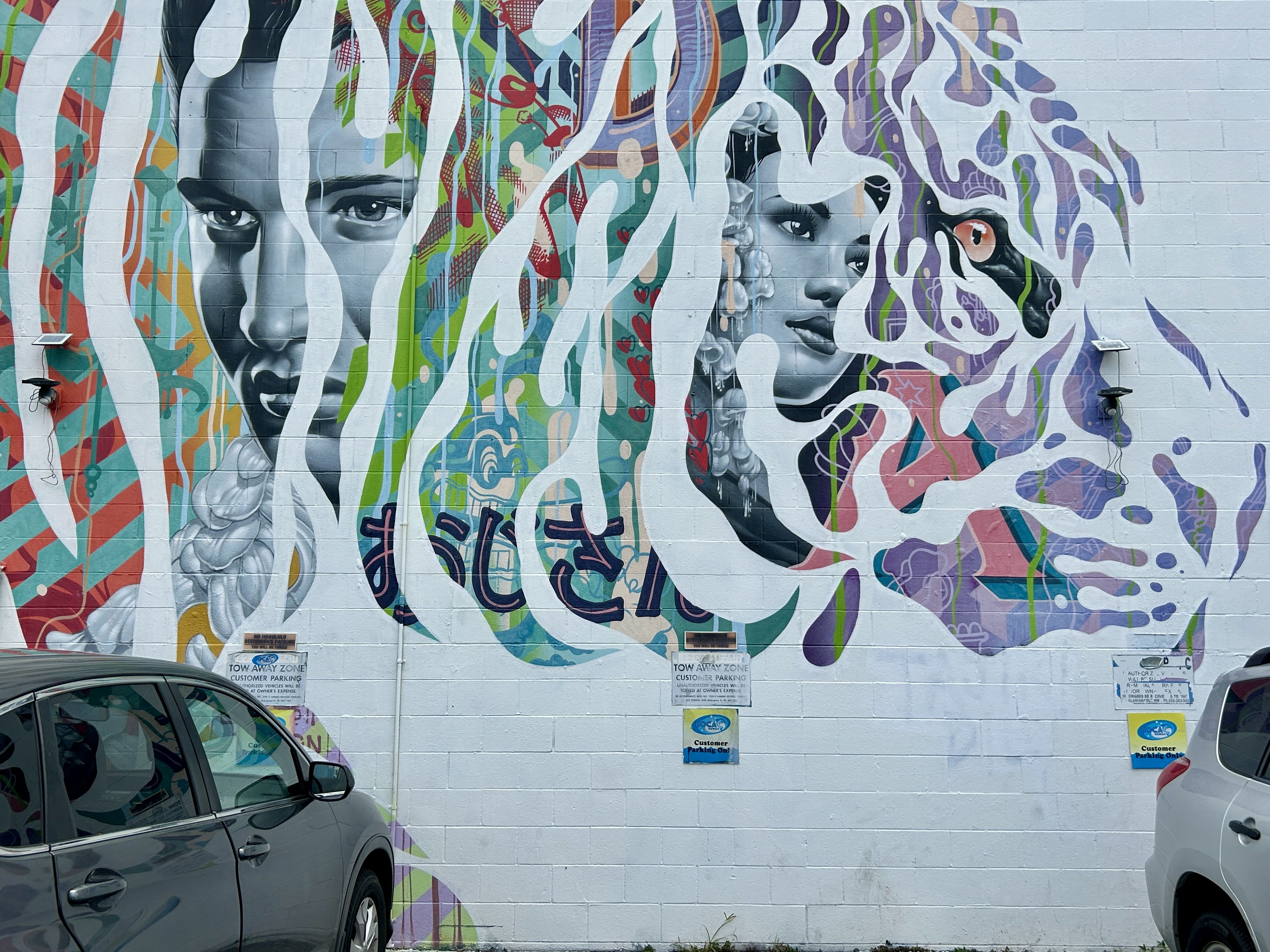
Initiated as a student competition with Kamehameha Schools, the Art Wall took shape on a steel framework that curved around an existing building’s radial corner—a strategic response to the limitations in jurisdiction and ownership within Kakaʻako. Wrapped in taut canvas where art installations rotated periodically, the wall initiated an open-air gallery for the public to enjoy. Its success catalyzed a broader movement for public art in Kakaʻako, laying the groundwork for the growth of the POW! WOW! festival, which now brings dozens of local and international artists together each year to transform the surrounding district. As murals multiplied across the neighborhood, Kakaʻako became a living archive of visual storytelling, layered with contemporary references and shared history.
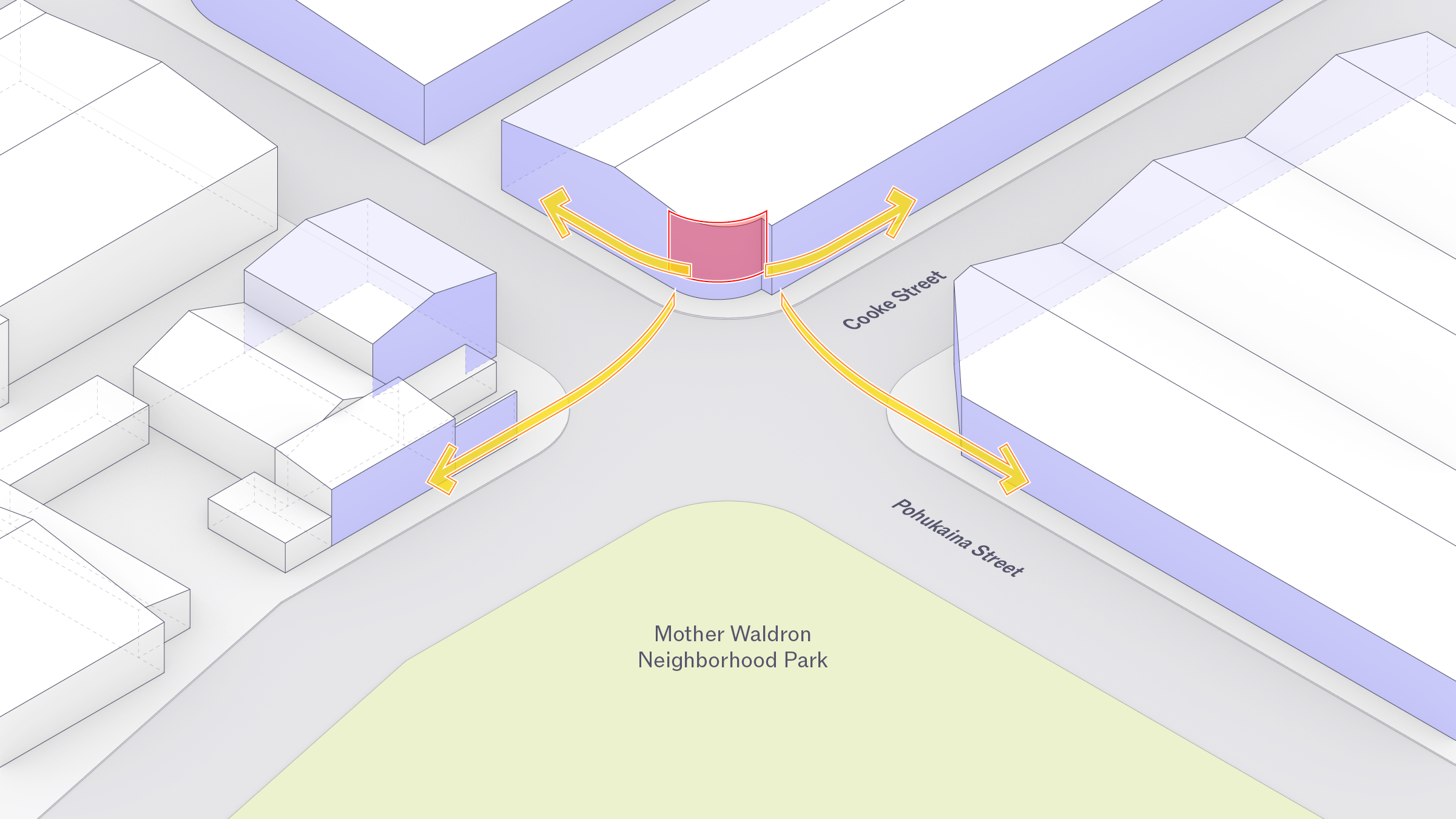
The Kakaʻako Art Wall served as an anchor and invitation, an architectural gesture that shifted how people moved through and engaged with the neighborhood. It demonstrated how small-scale interventions could have a disproportionate impact when placed with care and intention. Today, it aims to continue to shape the perception and use of public space in Kakaʻako, contributing to a broader redefinition of Honolulu’s urban core. Its legacy is not only the images it has held, but the momentum it sparked—proof that public space, when made accessible, can become a shared canvas for collective identity.