Newsletter #011: Artist Scott Hocking on How Attention Has a Way of Changing What We Find
“…I came to see these places as part of a natural cycle: birth, life, death, decay, and rebirth.”
Time spent with a place changes what we notice. The imperfect, the ordinary, and the unexpected take on different weight, offering new ways to understand the environments we move through every day. This month, we’re grateful to have artist Scott Hocking reflect with us on the role observation, time, and place play in shaping the way he works—and the way he sees the world.
—Sooyoun and William, Co-Founders & Principals
INSIDE
COMMUNITY: Scott Hocking
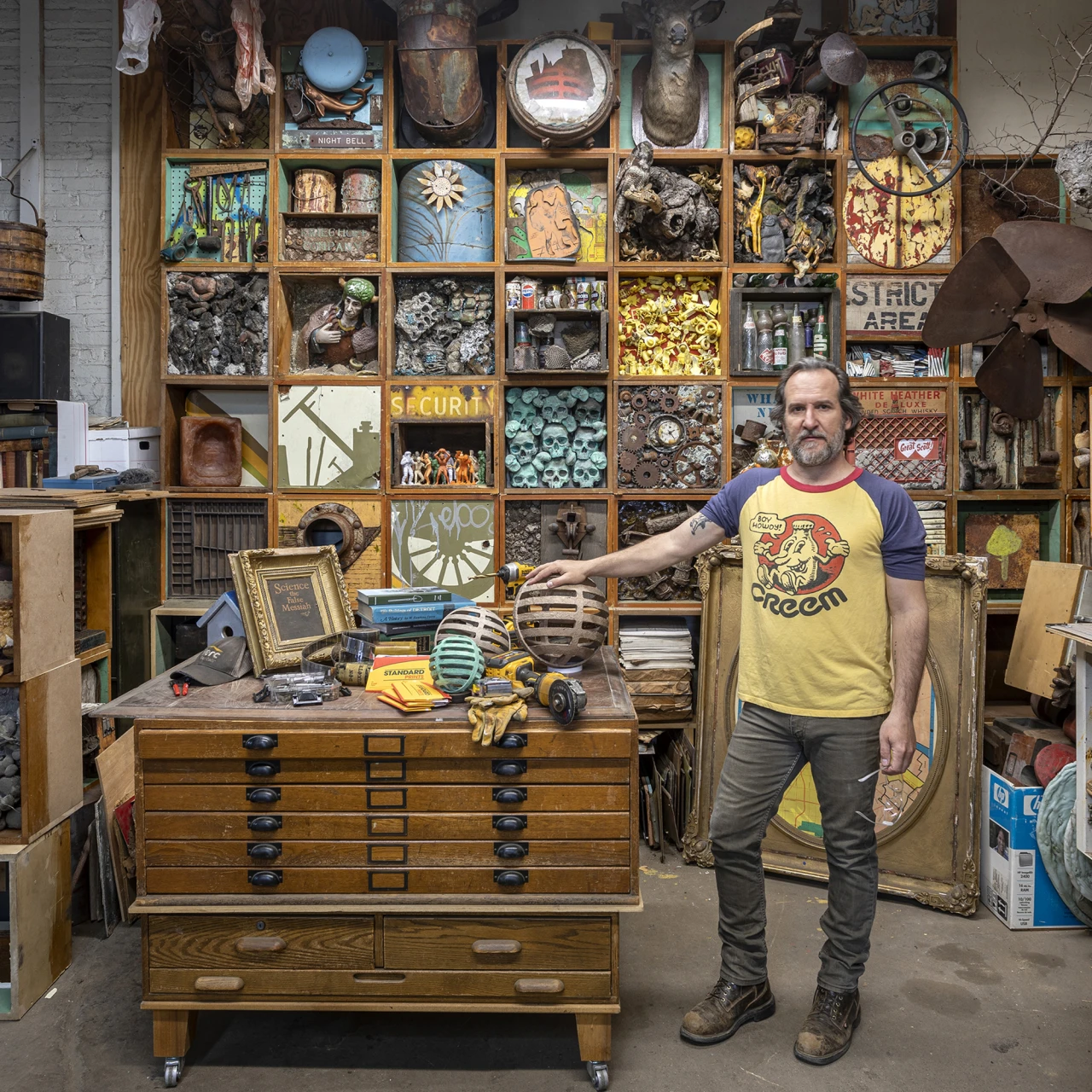
Scott Hocking is a Detroit-based artist working across sculpture, installation, and photography. When we first met Scott four years ago, we immediately recognized a shared way of looking at the world. His site-specific practice begins with observation, found materials, and neglected places, creating works shaped by the histories and conditions already there. In this conversation, he shares how decades of working within these environments have shaped his thinking about transformation, chance, and making.


Much of your work begins by spending time in a place before making anything. What are you looking for during that period of observation, and what tells you it’s time to begin making?
I’ve learned through experience that ideas come from being onsite—really understanding the surroundings, the energy, the sightlines, and getting a feel for a place before developing concepts for a project. Early on, I met people researching Detroit through books and archives who arrived with a completely different understanding once they experienced the city firsthand. I came to the same realization through travel. As my work took me across the country and eventually around the world, it became clear that I learned so much more by being onsite in each location than I ever could virtually.
I still spend a lot of time researching each site—studying its history, digging through old maps, reading interviews—but none of that replaces experiential knowledge. Ideally, I can spend days or weeks in a place, meeting people, learning from local history, and allowing ideas to develop naturally. Other times, deadlines require everything to happen at once: research, observation, concept development, and making. Every project has its own set of circumstances, so there’s never a typical timeline. What I’m ultimately looking for is that moment when the place, the materials, the energy, and the ideas I’ve been carrying all come together in a kind of lightning-strike vision. That’s when I know I’m ready to begin making.
Many people see abandoned places as evidence of loss or decline. Your work often uncovers something else entirely. What has spending decades working within these environments taught you about transformation?
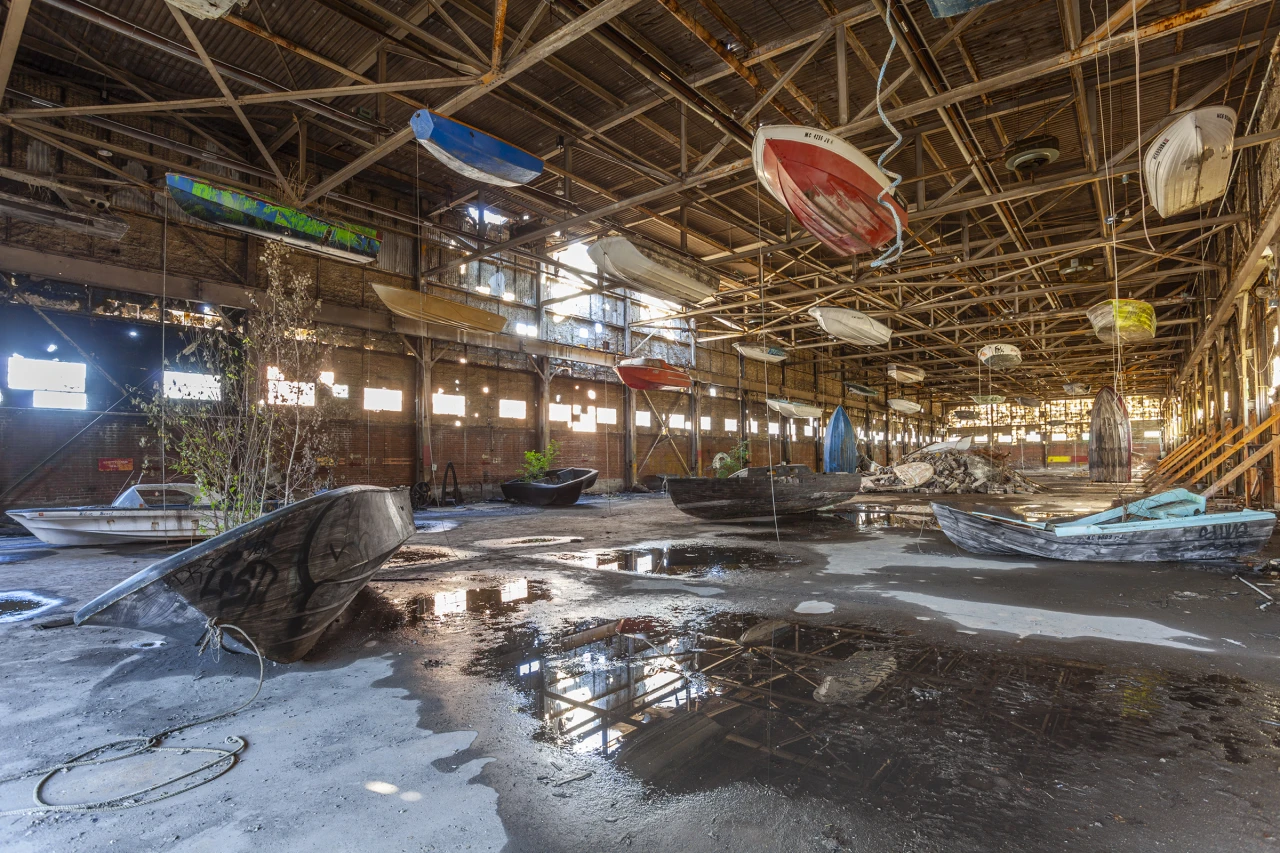
Coming from Detroit, and growing up in the '70s, '80s, and '90s, I was surrounded by a postindustrial landscape filled with vacant factories, shuttered buildings, and abandoned homes. It was so commonplace that everyone here became used to it, while older generations who remembered Detroit during its heyday often saw these places as sad failures and reminders of how far the city had fallen. Like a lot of teenagers, I rebelled against those ideas and started looking at these places differently. I grew up working class, and junkyards, railroad tracks, and industrial landscapes were all part of everyday life. I saw abandoned factories as enigmatic time capsules, with layers of history, architecture, and materials going to waste, and I found beauty in those transformations.
I began asking what made these industrial ruins any different than ancient ruins—why do we revere some while decrying others? It was about time, distance, and memory. People were too close to see it, but these industrial ruins were artifacts of the past, structures that will never be built again, now intertwining with and reverting to nature. When I decided to become an artist, these sites became my main source of inspiration and materials, and they became my solace, the closest thing I had to nature walks. I found it heartening, even exciting, to watch nature reclaim whatever wreckage humans leave behind, and I came to see these places as part of a natural cycle: birth, life, death, decay, and rebirth. We all experience these cycles, people do, plants do, seasons do, even cities do. I wanted to shine a light on these symbolic places rather than hide, diminish, or demolish them, and to challenge the negative perceptions surrounding abandonment by showing the beauty that can be found in these transitions. Over the decades, I've watched Detroit experience a complete rebirth, and many of the abandoned factories I once worked in have now been demolished or renovated. The city continues to transform. The only constant is change—whether that's my artwork and methods of creating, or the places and materials I create with and within.

You've spoken about trusting chance and letting go of control. What has that practice made possible that careful planning never could?
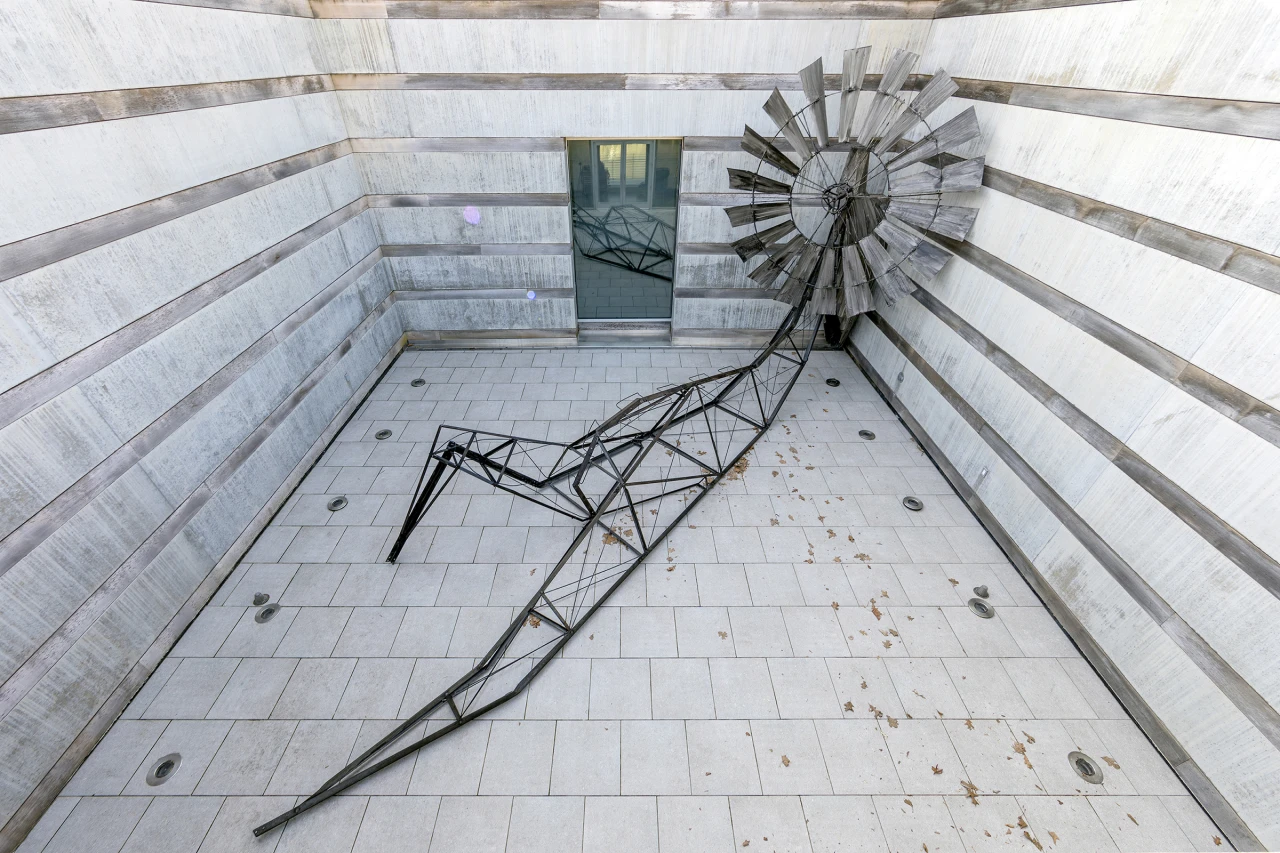
My projects often require elaborate planning, structural engineers, and 3D-printed maquettes, yet I also use art making as a meditative practice to navigate my life. Every project is a balance between careful planning and being willing to lose control and adapt to unexpected changes. I learned that through years of creating site-specific installations in abandoned factories, where I was almost always trespassing and had no control over what might happen. Buildings could be boarded up, burned down, or demolished, works-in-progress could be destroyed, and every site came with its own hazards and unknowns—debris, lead paint, asbestos, stray animals, random human encounters to name a few. I never knew if a building would still be standing, if my work would still exist, or if I'd be able to finish it. It became a practice of letting go of control. I accepted that things were going to work out how they were supposed to. Sometimes that meant a project ended before I expected it to. I grew to appreciate that way of working because it became a larger lesson in letting go of material things and knowing when to let a project end. Like the natural cycles I often think about in my work, one project ends so another can begin. I try to carry that meditative, art-therapy aspect of my practice into every project.
Many of your installations are temporary, while your photographs continue to circulate long after the work is gone. How do you think photography changes the way a work continues to exist?
For me, the photographs are their own projects, created concurrently with a three-dimensional work but living well beyond their physical counterpart. I used to take photos early in my career, but I’m not a trained photographer. In the beginning, I would bring a camera with me while trespassing so I could claim I was only taking photographs if anyone questioned me. While I was mainly searching for sculptural materials, I gradually started seeing the photographs as more than documentation and began thinking about lighting, framing, and composition as part of the artwork itself. It took years before I felt comfortable calling myself a photographer rather than just a sculptor with a camera.
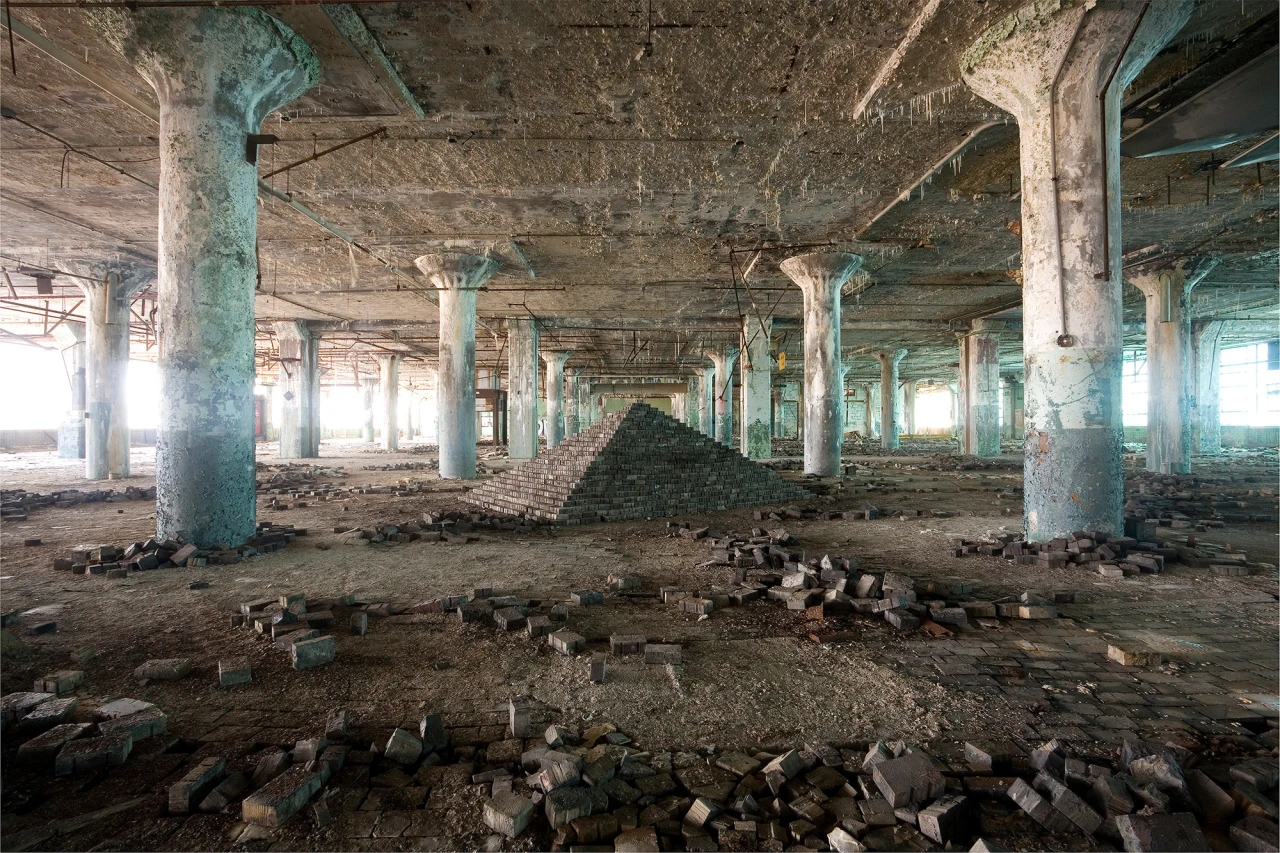
The turning point came with Ziggurat & Fisher Body 21 in 2007, when I began thinking about the installation and the photographs as two connected but separate projects. I thought about Christo, who created drawings and renderings of projects no one would fund and used those works to help fund the larger ideas. Genius. I could create a site-specific installation, but also an elaborate still life for a photographic project. This appealed to me on many levels; I’d discovered my new way of working. Photography was another way for a site-specific work to continue beyond the physical installation. The site-specific works would often be destroyed for all the left-to-chance, out-of-my-control reasons I’ve mentioned, but the photographs would become the thing that lived on after the installation disappeared. I liked the dichotomy between the different audiences that encountered each work—the people who experienced the installations in abandoned spaces and the people who encountered the photographs within the art world. Creating two projects in this manner and seeing the different reactions to the works by such different audiences was fascinating to me and continues to this day. As the years go on, the photographs become photos of ghosts, capturing a fleeting moment in the history of each place where the projects were created.

Is there a place you've never worked that continues to occupy your imagination? What draws you to it?
I’d like to make a work in the vein of the great land art and earthwork artists of the 1970s—Turrell, Smithson, Heizer, Holt, DeMaria, Judd—and create a site-specific work somewhere in the deserts of the American West. I don’t want to spend 50 years on it, ha, but I’d love to make something large-scale that sits out there weathering away for generations. Like most artists, I have an unending list of project ideas rattling around in my head, and I’d be happy to make a work in any country that would have me, but if I had to choose one that continues to occupy my imagination, it would be my Salt House project. Years ago, I had a vision of building a sculpture in the Great Salt Desert moonscapes of Utah: a conical “salt house” structure, the kind of conical buildings that are often used as road maintenance barns, filled with salt for melting ice, sitting like a stout organic hut somewhere between ancient forms and contemporary utility. I imagine the structure partially submerged in the salt desert, sitting slightly askew with its bay door half buried in the salty earth. I want it to feel as if the entire desert has spilled from inside the structure or as if it is an ancient mysterious relic partially buried through the ages. Either way, a work that people can discover and think: What the hell is that?