LINKLAB Newsletter #012
“Growth changes a city in ways that are easy to see, but harder to get excited about.”
Having lived and worked in Phoenix for years, we’ve watched familiar places evolve alongside new patterns of development, investment, and everyday life. This issue considers what happens when a city grows faster than its sense of uniqueness, and where opportunities for greater variety and connection can emerge. The question is less about what a city can become, and more about what kind of place we are building as it does.
—Sooyoun and William, Co-Founders & Principals
MATTERS
The Missing Layer

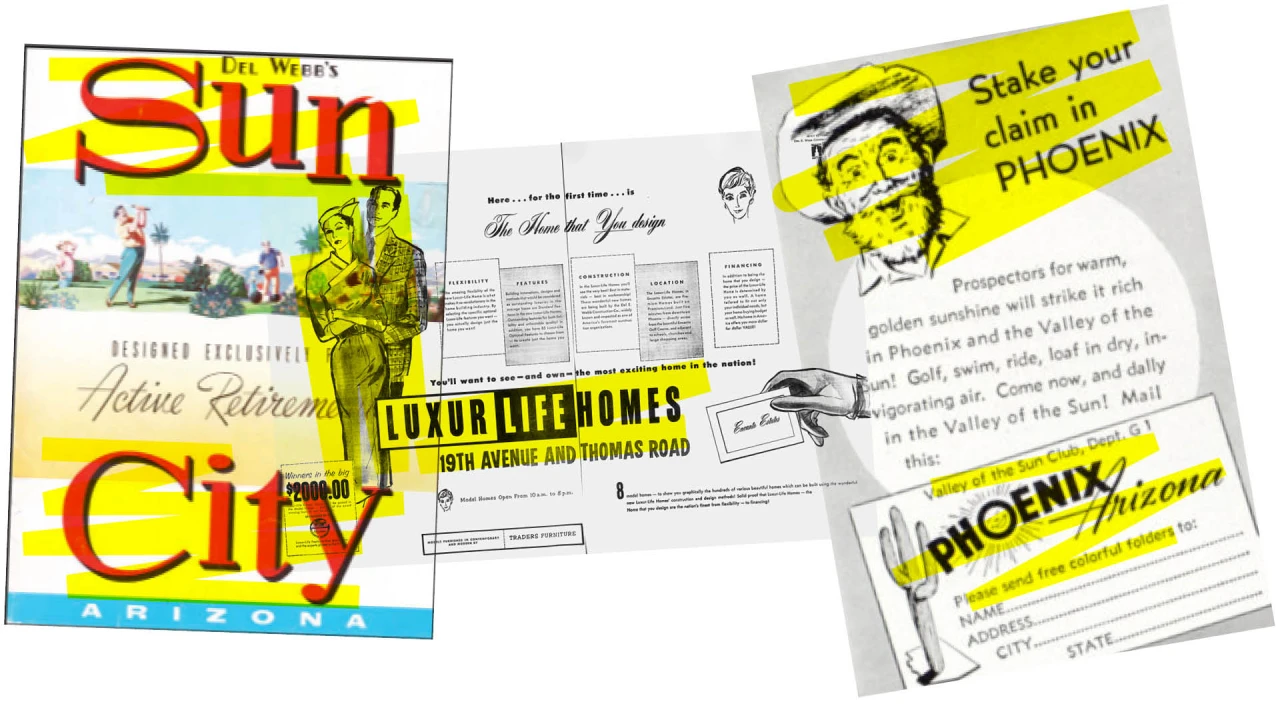
We tend to talk about cities through their largest systems because they are easiest to map and measure, but our experience of place is shaped just as profoundly by decisions made at much smaller scales. Sometimes smaller scales do not even exist or differentiate to a degree that actually increases value. Neighborhoods can decay at the same time that their price points escalate while new residents purchase the worn leftovers of original inhabitants at lower levels of affordability. The neighborhood may look the same physically while the people, businesses, and culture that once made it distinct are replaced.
The one-mile grid of Phoenix provides an obvious metropolitan framework. It organizes movement, infrastructure, and expansion with remarkable clarity. But that clarity alone does not explain why one neighborhood feels distinct from another. Across the city, the same pattern begins to repeat within the grid: the setbacks, the building forms, the commercial corridors. Parking lots echo one another from block to block, new construction adopts familiar formulas, and the differences between neighborhoods become harder to read. The framework remains legible, but the finer grain begins to flatten into sameness.

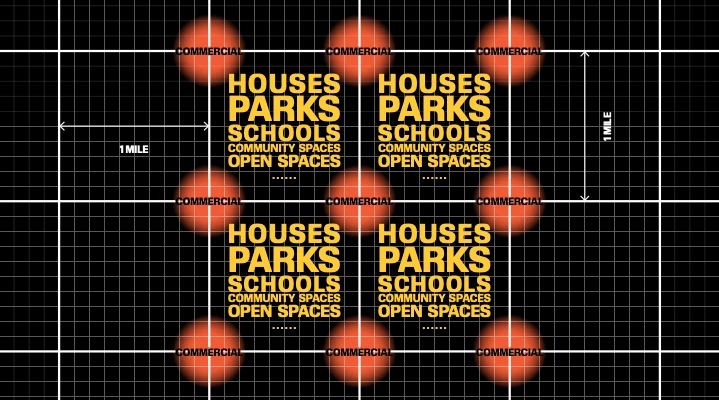
Neighborhood commercial clusters inform another layer of city-making. Local participation and incremental change accumulate over time, introducing identity, diversity, and texture that standardized development alone cannot provide. These places are less the product of a single vision than of many people investing in the same place over time. Character emerges from the accumulation of uses, relationships, and decisions that are specific to their surroundings. SAME CITY is a 5-year effort to examine Phoenix through this lens and demonstrate how little of these very things are meaningfully happening.
A city is strongest when these scales reinforce one another. The framework creates possibility, but the finer grain determines whether places become interchangeable or unmistakably their own. Creating greater distinction requires more than acknowledging that difference has value. It requires choices about what gets preserved, what gets adapted, what gets added, who gets to participate, and where those decisions are made. If the one-mile grid gives Phoenix its structure, what happens within it is where the city has the opportunity to become itself. Frameworks can be standardized. Character cannot.
MAKE
Next House
NEXT HOUSE, a recent international competition, provided the LINKLAB research and design team with a platform to explore methods of deploying design tools (at a granular, user-determined scale) as a means to promote distinction of people and place, right at home in one of Phoenix’s most notable subdivisions. This effort was a fitting next step to the SAME CITY research project that the firm has been developing since 2020.

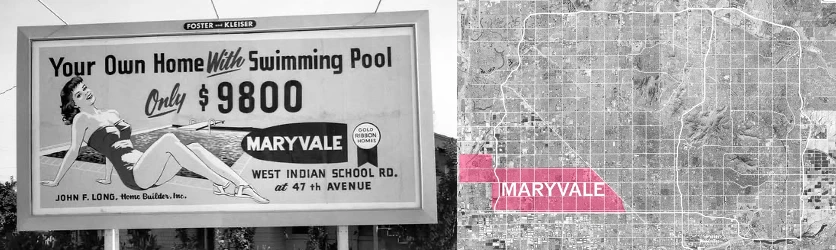
Maryvale emerged in the 1960s as an expression of the American suburban dream: spacious living, sunlight, and homeownership within Phoenix’s expanding one-mile grid. While this framework introduced well-constructed neighborhoods, the intrinsic value of this approach was often exhausted within a single generation, with replacement over renovation. Meanwhile, increasing automobile dependence gradually contributed to more isolated patterns of living. Many homes may remain structurally resilient, yet the neighborhoods themselves now face changing social and economic conditions like stagnation of place and limited opportunities for adaptation.

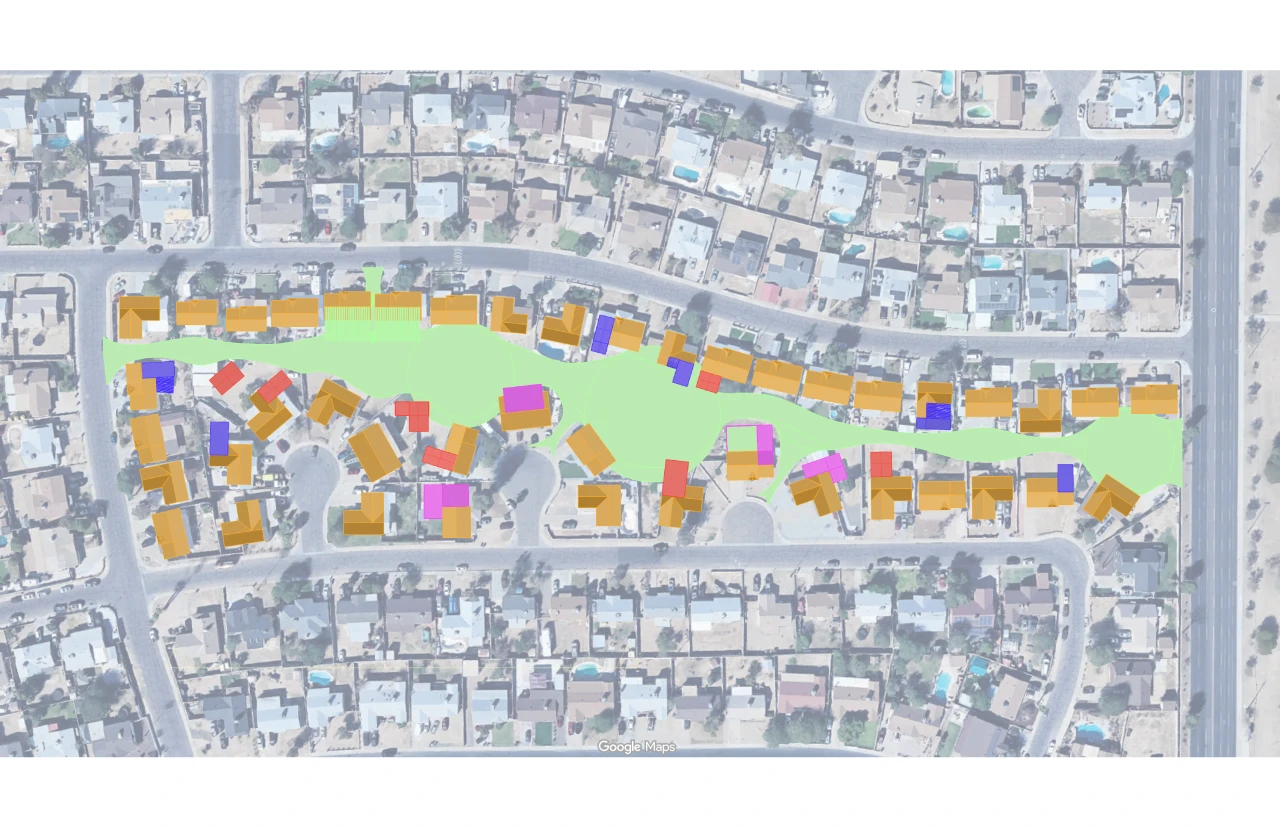
Our approach sought to unleash the latent creative energy stuck within aging subdivisions. Through affordable prefabricated modular interventions, greater walkability, green space, and shared community areas can be introduced with minimal disruption. Expansion kits that connect homes while maintaining privacy and offering community rooftop spaces, along with steel-pole and canvas extensions creating additional outdoor living space, enliven and support a renewed residential experience.

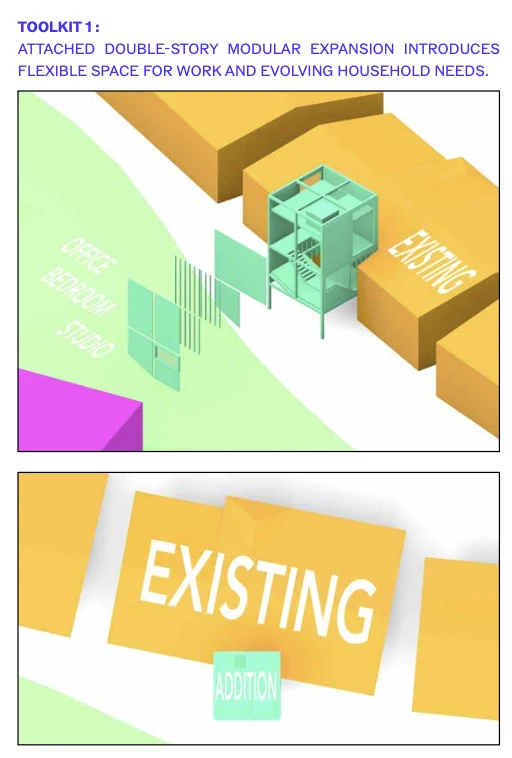

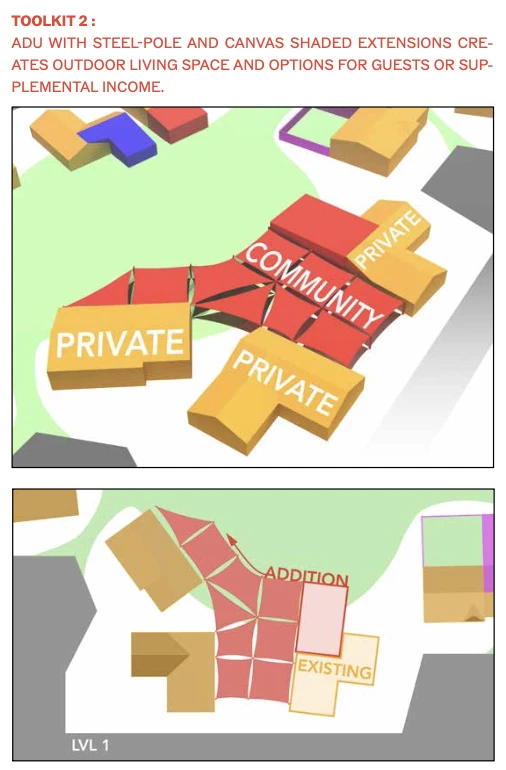

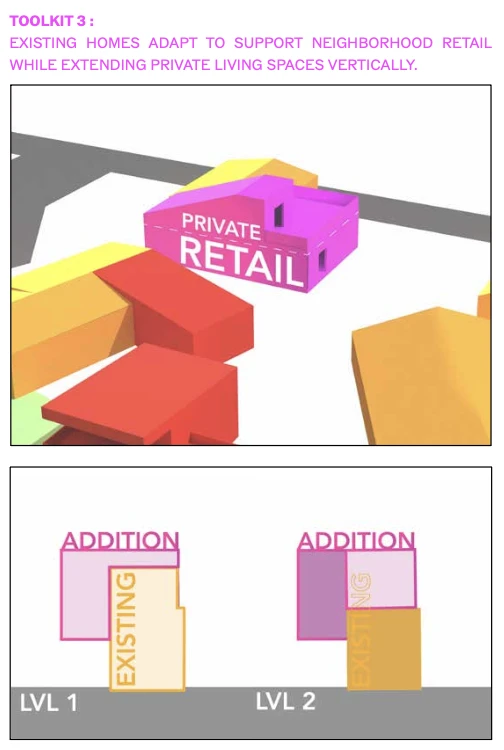

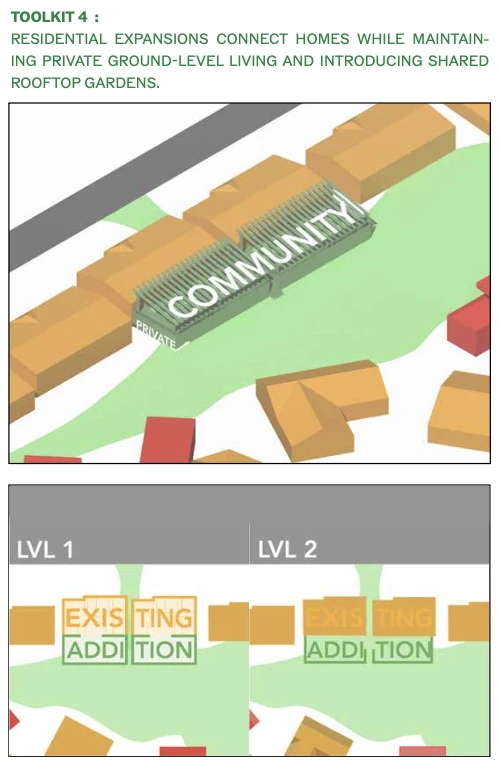
Mosaic Maryvale creates a framework for incremental change, allowing neighborhoods and their residents to evolve over time. Increased walkability and opportunities for microeconomies support greater diversity and stronger community connections.